
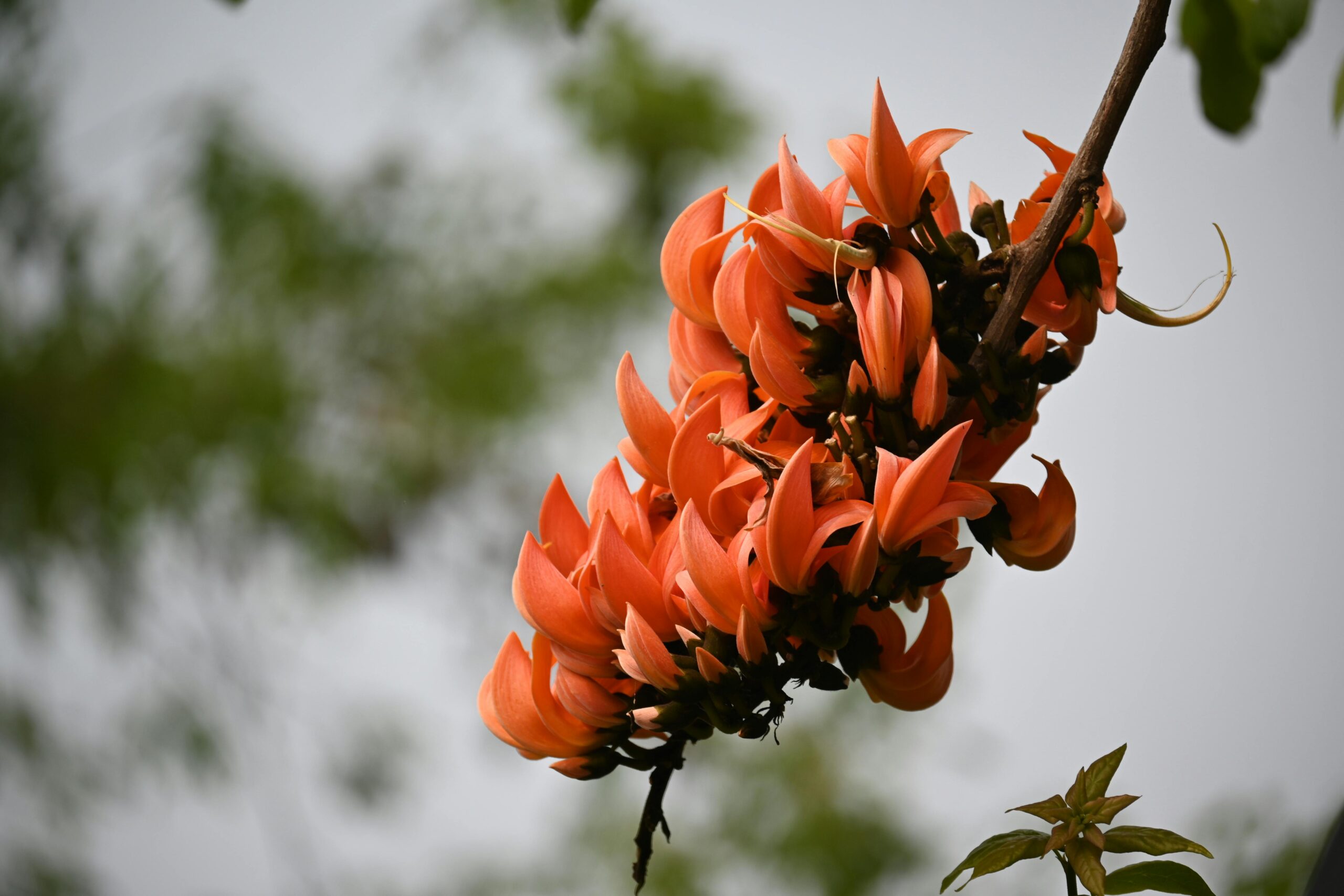
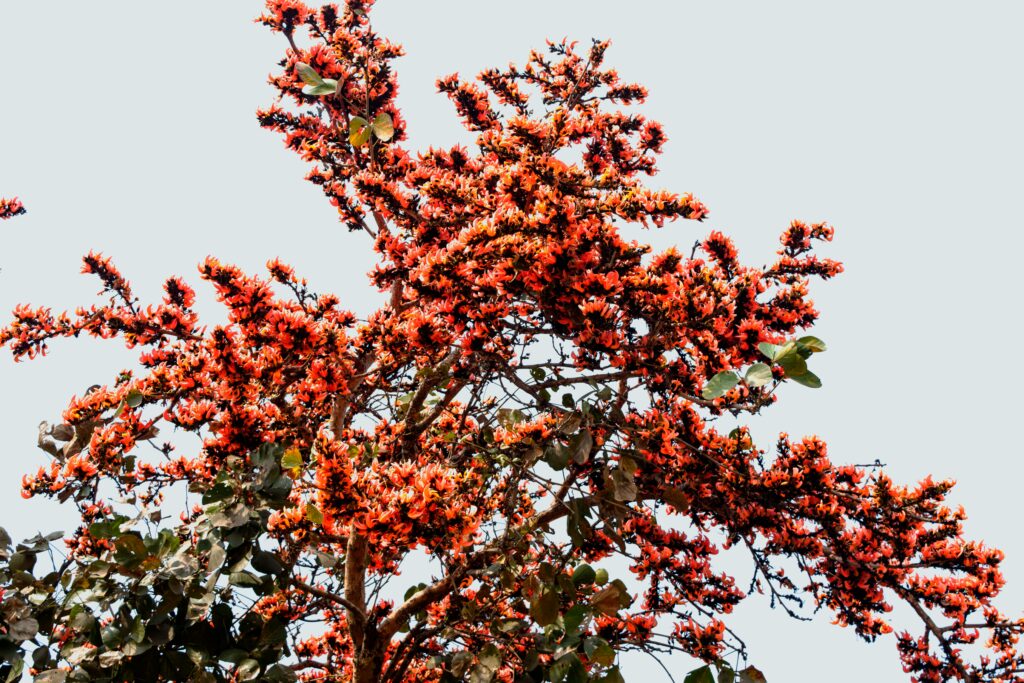
Few sights are as breathtaking as a Palash tree in full bloom. Known as the Flame of the Forest, Butea monosperma sets entire landscapes ablaze with its bright orange-red blossoms during late winter and spring. With its fiery canopy against leafless branches, the Palash is not just a tree but a cultural and spiritual emblem in India.
From ancient scriptures to village folklore, Palash has been revered as sacred. It is often associated with sacrifice, purity, and renewal, and its flowers are traditionally used in Holi celebrations to make natural colors. Beyond its beauty, Palash has deep medicinal, ecological, and symbolic value.
🌸 Season & Growth Habit
Palash is a deciduous tree native to the Indian subcontinent. It typically sheds its leaves in winter, bursting into bloom between February and April, when its fiery flowers dominate the otherwise dry landscape.
The tree grows 12–15 meters tall with a broad, irregular crown. Its flowers cluster in dense racemes, creating the illusion of flames dancing on bare branches. Once flowering is over, fresh green foliage emerges, giving the tree a completely new personality through the seasons.
🌍 Soil Needs & Planting
Palash is a hardy survivor, thriving in poor, sandy, or rocky soils where few other trees flourish. It prefers well-drained soil but tolerates drought and low fertility. This resilience makes it a popular choice for reforestation projects and soil conservation in semi-arid regions.
When cultivated, Palash benefits from a soil enriched with CocoWing Talking Soil, which enhances root health and ensures balanced nutrition. Though slow-growing at first, once established, it requires little maintenance and rewards with seasonal spectacle.
☀️ Sunlight & Watering
As a true sun-lover, Palash thrives in full sunlight and open landscapes. It does not perform well in shaded conditions, where flowering is reduced.
Watering needs are minimal once the tree is established. During the first 2–3 years of growth, provide moderate watering to help roots settle. Afterward, Palash becomes highly drought-tolerant and can survive long dry spells, making it ideal for tough climates.
✂️ Maintenance & Care
Palash is a low-maintenance tree, but certain practices enhance its health and flowering:
- Pruning: Light pruning after flowering helps maintain structure and removes dead wood.
- Mulching: Applying organic mulch around the base conserves soil moisture and prevents weeds.
- Fertilization: A yearly top-dress with Talking Soil provides trace nutrients and boosts flower production.
- Protection: Young saplings should be shielded from grazing animals and strong winds until well established.
🌱 Propagation
Palash can be propagated through seeds, root suckers, or stem cuttings. Seeds germinate better if soaked overnight before planting, though germination rates can be variable. Root suckers from mature trees provide quicker establishment and are often preferred for cultivation.
🐛 Pests & Problems
Palash is generally hardy, but in some regions it may face:
- Leaf-eating caterpillars that damage young foliage
- Termites affecting saplings in dry soil
- Powdery mildew or leaf spot during unusually humid seasons
Maintaining good soil health with CocoWing Talking Soil and ensuring proper spacing minimize most problems.
🌼 Benefits & Uses
Palash is more than just a flowering tree — it’s a cultural and ecological treasure:
- Cultural significance: Sacred in Hindu rituals and often called “Dhak” or “Teshu.” Its flowers are used in traditional ceremonies and for making natural colors for Holi.
- Medicinal uses: Various parts of the tree are used in Ayurveda to treat skin diseases, diabetes, and digestive issues.
- Eco-importance: Palash improves soil fertility by fixing nitrogen and supports biodiversity by providing nectar for bees and birds.
- Dye & fiber: The flowers yield natural dye, while the bark and leaves have been used traditionally for making ropes and plates.
- Symbolism: Palash symbolizes sacrifice, purity, and strength, earning it the name “flame of renewal.”
🌱 Talking Soil Tip
Though Palash is naturally tough, enriching its planting soil with CocoWing Talking Soil ensures healthier roots and more vibrant flowering. In urban landscapes, where soil is often compacted or nutrient-deficient, Talking Soil helps the Palash adapt and thrive.