
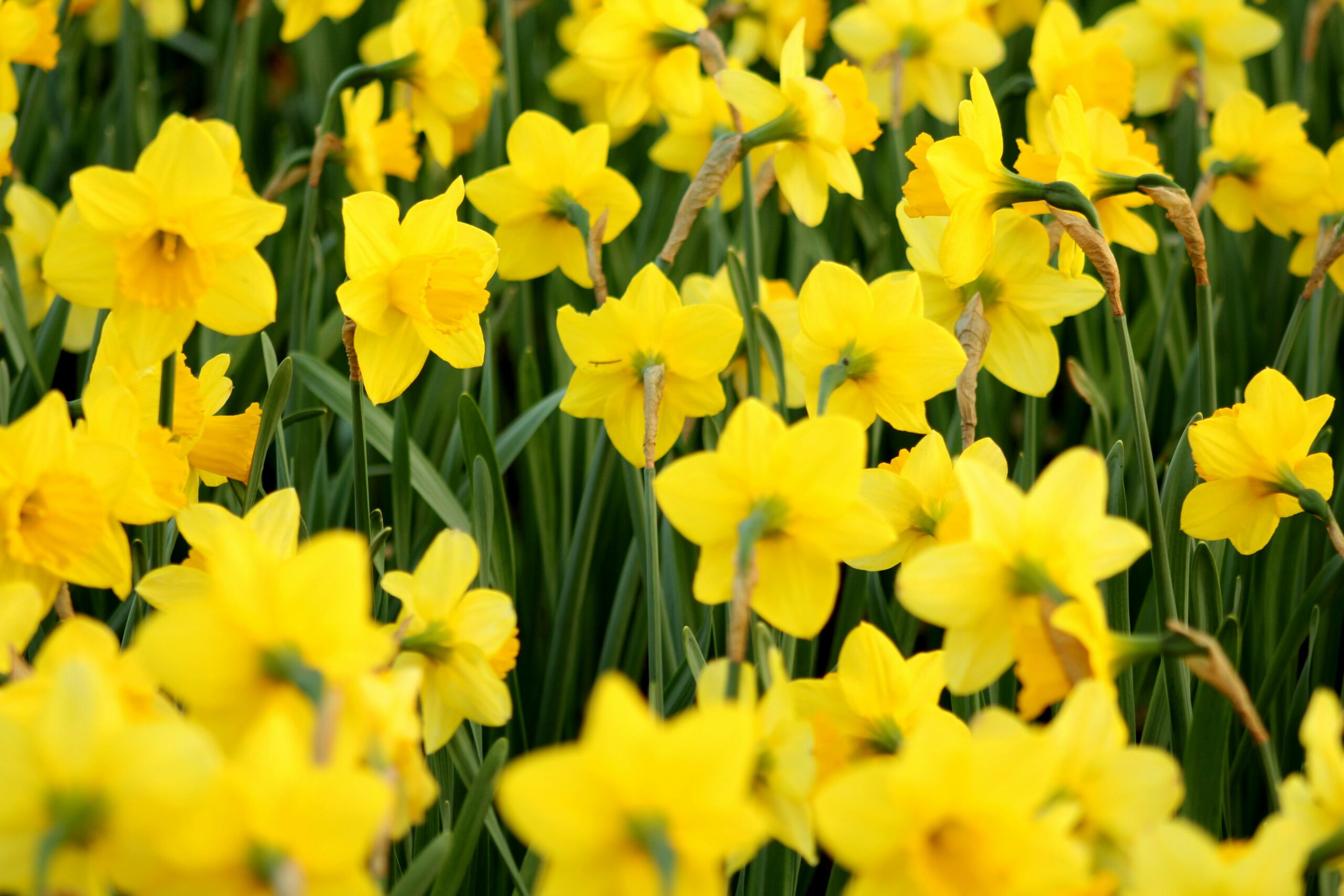
Few flowers announce the arrival of spring quite like the daffodil. With their sunny yellow, creamy white, or vibrant orange blooms, daffodils instantly lift the mood of any garden or home. Botanically known as Narcissus spp., these perennial bulbs are remarkably hardy and easy to grow, making them a favorite among both novice and experienced gardeners.
Daffodils are also symbolic — representing renewal, hope, and new beginnings. They pair beautifully with early-spring companions like tulips, hyacinths, and crocuses, creating cheerful, layered displays that draw the eye and attract early-season pollinators.
🌸 Season & Growth Habit
Daffodils are spring-blooming bulbs, planted in the fall to ensure strong growth and vibrant flowers the following spring. Their foliage emerges first in early spring, followed by striking flower spikes that can range from 6 inches to over 2 feet tall depending on the variety.
Once in bloom, the trumpet-shaped flowers last for 2–3 weeks, bringing bright color to the garden when most other plants are still waking from winter. After flowering, the foliage continues photosynthesis to replenish the bulb for the next year’s growth — a crucial step often overlooked by gardeners.
🌍 Soil & Planting
Daffodils thrive in well-drained, fertile soil rich in organic matter. Heavy clay or waterlogged soil can rot bulbs, so amend garden beds with compost, sand, or grit. For containers, a mix of garden soil, coarse sand, and compost works perfectly.
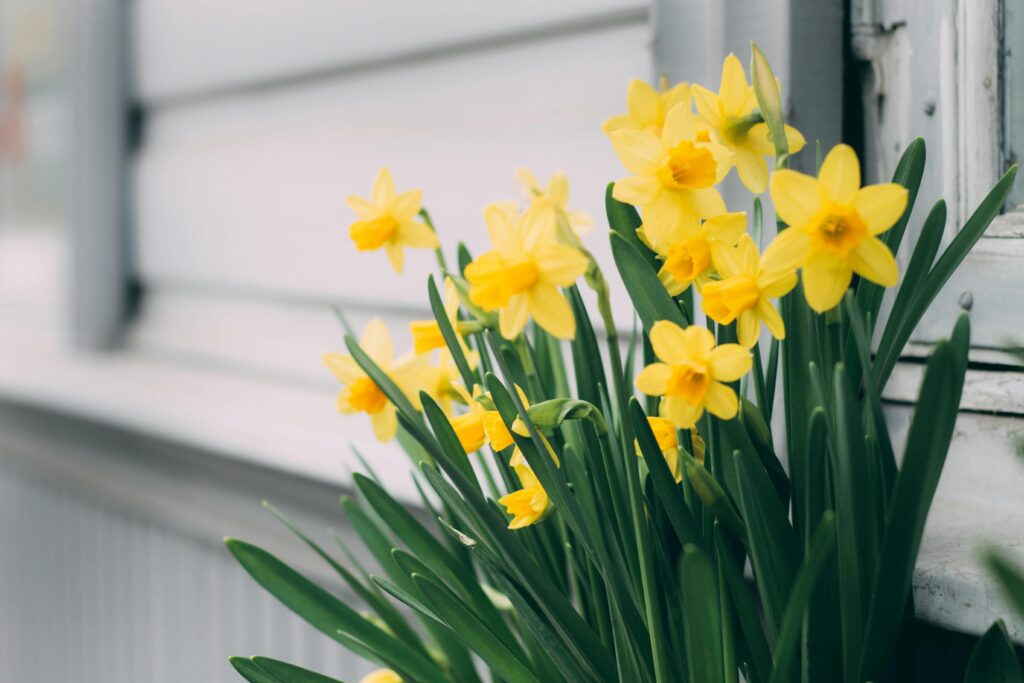
Plant bulbs about 3 times their height deep, usually 4–6 inches below the soil surface, with the pointed tip facing upwards. Space bulbs 3–6 inches apart to allow enough room for root and bulb expansion. Incorporating CocoWing Talking Soil at planting enriches the soil organically, promotes healthy root growth, and ensures long-lasting, vibrant blooms.
☀️ Sunlight & Watering
Daffodils prefer full sun to partial shade. In full sun, they produce strong, upright stems and richly colored flowers, while light shade is tolerated, especially in warmer climates.
Water regularly after planting until the soil settles and roots establish. During active growth in spring, keep the soil evenly moist, but reduce watering after flowering as the foliage begins to yellow and die back. Overwatering dormant bulbs can lead to rot, so careful moisture management is essential. Mulching helps retain soil moisture and keeps the soil temperature steady.
✂️ Maintenance & Bulb Care
Daffodils are low-maintenance, but certain practices maximize their performance:
- Deadheading: Remove spent flowers to prevent energy being diverted into seed production.
- Foliage care: Allow leaves to die back naturally; cutting them too early weakens the bulb for next year.
- Bulb lifting: In regions with hot summers or poor drainage, lift bulbs after the foliage has yellowed, dry them, and store in a cool, ventilated place until fall replanting.
Regular feeding with CocoWing Talking Soil during active growth and after flowering replenishes nutrients naturally, ensuring healthier bulbs and brighter blooms in subsequent seasons.
🌱 Propagation
Daffodils propagate primarily by offset bulbs. Each parent bulb produces smaller bulbs around its base over time. Once mature, these can be separated in late summer or early autumn and replanted. This slow natural division allows gardeners to expand their display year after year without purchasing new bulbs.
Seeds can also be collected, but this method is slow — it may take 5–7 years for seed-grown plants to bloom. For practical gardening, bulb offsets are the preferred propagation method.
🐛 Pests & Problems
Daffodils are generally pest-resistant due to toxic compounds in their tissues, which deter deer, rodents, and many insects. Occasionally, bulb flies or slugs may cause minor damage. Fungal diseases are rare if the soil is well-draining and bulbs are not overcrowded. Maintaining spacing, removing diseased foliage, and applying CocoWing Talking Soil all contribute to strong, healthy plants.
🌼 Benefits & Uses
Daffodils are not just visually appealing — they are early-season pollinator magnets, feeding bees and other insects when few other flowers are available. Their cheerful blooms make excellent cut flowers, lasting in vases for up to two weeks.
Planting daffodils en masse creates stunning spring displays in borders, under trees, or in naturalized meadows. Symbolically, they represent hope and renewal, making them perfect for gifting or seasonal decorations.
🌱 Talking Soil Tip
Top-dress daffodils with CocoWing Talking Soil in early spring to feed emerging shoots and flowers. Its organic nutrition strengthens bulbs and improves bloom quality naturally without the risk of over-fertilization.