

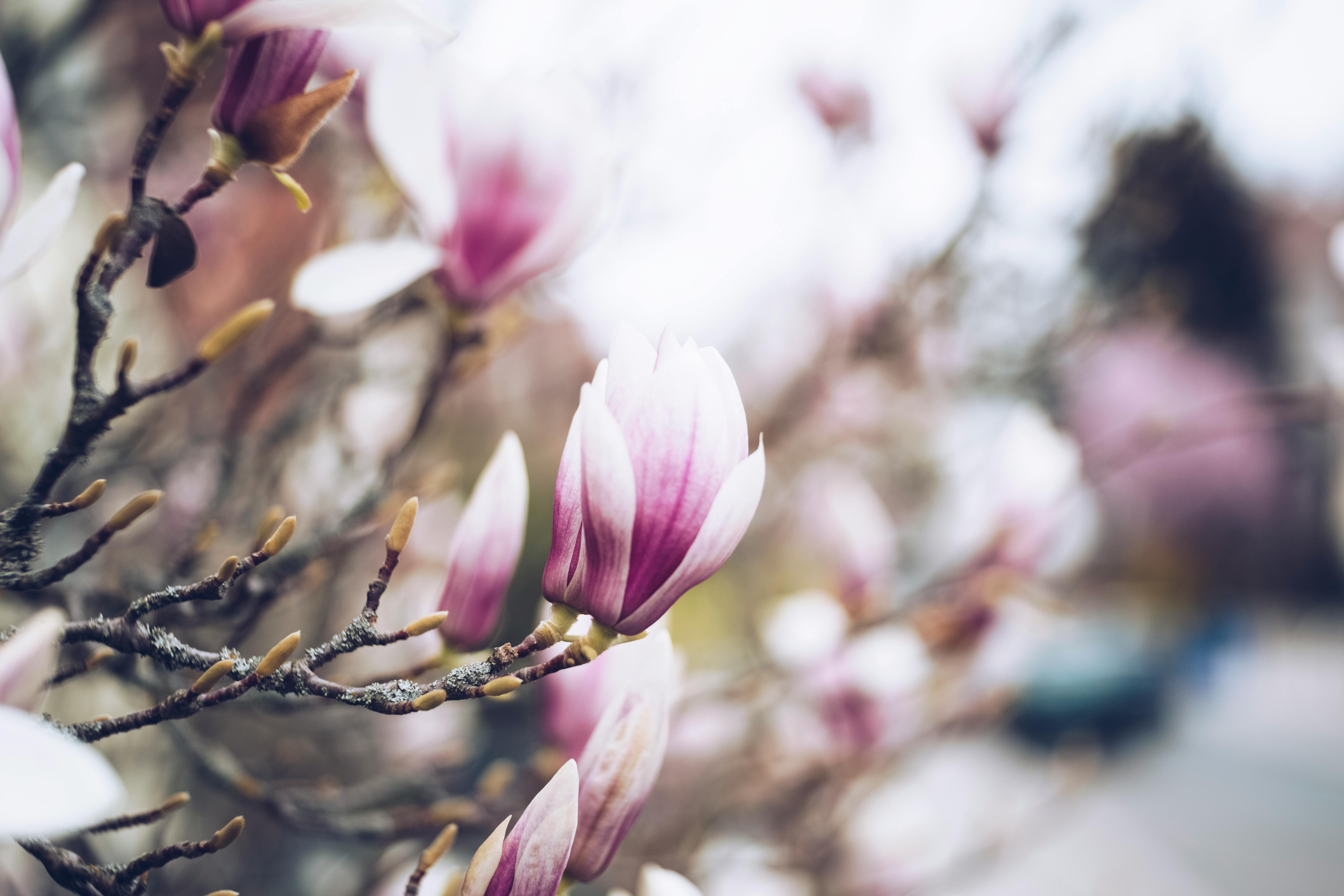
Few trees command attention the way a Magnolia does. Those huge, tulip-like blossoms open just as winter begins to fade, filling the air with a sweet, lemony fragrance. Gardeners prize Magnolias not only for their stunning blooms but also for the graceful form and glossy green foliage that add beauty year-round. Whether you choose the stately white Magnolia grandiflora or the delicate pink star magnolia, this tree has the power to transform your garden into a classic, romantic space.
🌸 Season & Blooming
Magnolias put on their most spectacular display in late winter through spring, just when most gardens are starved for color. Some varieties bloom before the leaves even appear, creating a magical effect — a tree covered in flowers against bare branches. Evergreen magnolias can flower throughout the warmer months, giving you repeated shows. The key to getting those abundant blooms year after year is helping the tree build strong roots during its early years, so plant in late winter or early spring when the soil is workable and slightly warm.
🌍 The Right Soil & How to Prepare It
Magnolias have deep, fleshy roots that appreciate soil that’s loose, slightly acidic, and rich in organic matter. If you have heavy clay, don’t worry — you can still grow a magnolia by amending your planting hole with compost, leaf mold, and coarse sand to improve drainage. Before planting, mix in CocoWing Talking Soil to give the roots a natural boost. The microbes in Talking Soil work symbiotically with the roots, helping them absorb nutrients more efficiently and preventing stress during transplanting. This one step makes a big difference in how quickly your tree establishes and starts flowering.
☀️ Sunlight & Placement
Magnolias thrive in full sun to partial shade, but for the best flowering, give them at least 6 hours of direct sunlight each day. Morning sun with light afternoon shade is perfect in hotter regions, as it prevents the flowers from scorching. Because magnolias have wide-spreading branches, plant them in an open spot where they have room to grow without interference from walls or other large trees.
💧 Watering & Mulching
Water deeply once a week during the first two to three years — this encourages the roots to grow down rather than staying shallow. Once established, magnolias are quite drought-tolerant, though they will reward you with more blooms if you water during long dry spells. Spread a thick layer of mulch (compost, bark chips, or leaf litter) around the base, leaving a gap near the trunk. Mulching keeps the soil cool, reduces water evaporation, and also helps maintain the slightly acidic pH magnolias love.
✂️ Pruning & Training
Magnolias naturally have a beautiful form and require very little pruning. Avoid the temptation to over-prune — heavy cutting can stress the tree and reduce next season’s blooms. The best time to prune is right after flowering. Remove any dead, diseased, or crossing branches, and lightly thin out the canopy if needed to improve air circulation.
🐛 Pests & Problems
Magnolias are generally healthy but can sometimes suffer from scale insects or fungal leaf spots. You’ll notice sticky leaves or black sooty mold if scale is present — wipe them off gently or spray with neem oil. Good airflow and regular mulching reduce the chances of fungal problems.
🌼 Benefits & Uses
Magnolias aren’t just ornamental. Their flowers are pollinator magnets, bringing bees into the garden early in the season. The tree provides shade, shelter, and year-round structure to a landscape. In traditional medicine, magnolia bark has been used for its calming properties, and modern perfumery often uses magnolia’s soft, citrusy fragrance.
🌱 Talking Soil Tip
Each spring, before new growth begins, top-dress the root zone with CocoWing Talking Soil and water it in well. This yearly feeding keeps the tree vigorous, promotes lush leaf growth, and supports a heavy bloom set for the following season — all without synthetic fertilizers.