
The Yamuna floodplain in Delhi is a critical ecological buffer, playing a vital role in water purification, biodiversity conservation, and groundwater recharge. Yet today, this lifeline is severely threatened. A toxic blend of urban encroachment, pollution, and policy inaction has left large portions of the floodplain degraded, undermining both its environmental function and the city’s resilience to climate impacts.
Key Challenges Facing the Yamuna Floodplain
- Encroachment and Illegal Construction
Nearly 75% of Delhi’s floodplain has reportedly been encroached upon by unauthorized construction—ranging from roads, housing colonies, and metro casting yards. These constructions disrupt the river’s natural hydrology and restrict its ability to absorb floodwaters, making the city more vulnerable to climate shocks. - Increased Flood Risk
The devastating 2023 Delhi floods exposed how floodplain encroachments, siltation, and faulty barrage operations amplify disaster risk. The Yamuna’s natural carrying capacity has been dramatically reduced, and even normal monsoons now trigger urban flooding in low-lying areas. - Pollution and Waste Dumping
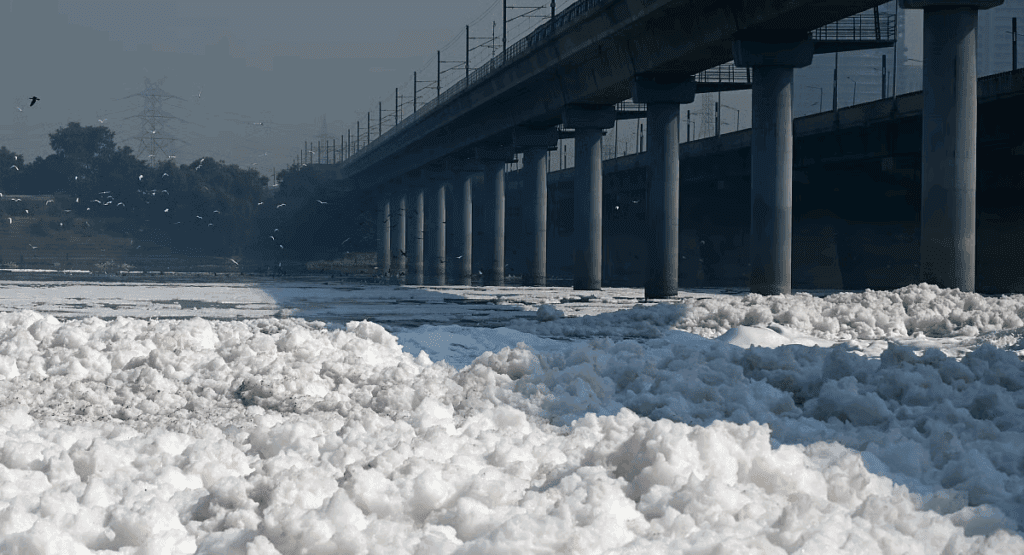
The floodplain serves as an informal dumping ground for construction debris, solid waste, and untreated sewage. Toxic effluents from nearby industries and settlements flow into the river and seep into the soil, contaminating both surface and groundwater. - Ecological Degradation and Biodiversity Loss
Once home to riparian forests, grasslands, and rich aquatic life, the floodplain is fast becoming an ecological desert. Migratory birds no longer find resting habitats; native flora has vanished. The loss of wetlands and vegetation strips the floodplain of its natural water-filtering and recharge functions. - Inadequate Demarcation and Management
Despite repeated NGT directives, large stretches remain undemarcated and unprotected, resulting in weak enforcement against violators. Multiple departments—DDA, DJB, MCD, and Irrigation & Flood Control—struggle to coordinate a coherent restoration plan.
What the Government Is Doing in 2025
In 2025, the Delhi government, in coordination with Central Water Commission (CWC), Irrigation & Flood Control Department (IFCD), and Yamuna Monitoring Committee, has begun to take some corrective steps:
- Pilot Restoration Zones: Areas near Ishwar Nagar, Bela Estate, and Yamuna Biodiversity Park are being considered for demarcated greening and cleanup efforts.
- Afforestation Campaigns: Under the umbrella of the Yamuna Action Plan (Phase III) and Mission LiFE, efforts are underway to green degraded patches.
- Sewage Treatment Plants (STPs) and de-silting are being prioritized.
- Community involvement through eco-clubs and river walks has been initiated to raise awareness.
However, what’s still missing is a scalable, nature-based, inclusive solution that tackles both ecological degradation and water security.
How CocoWing’s 3-Layered Plantation Can Help
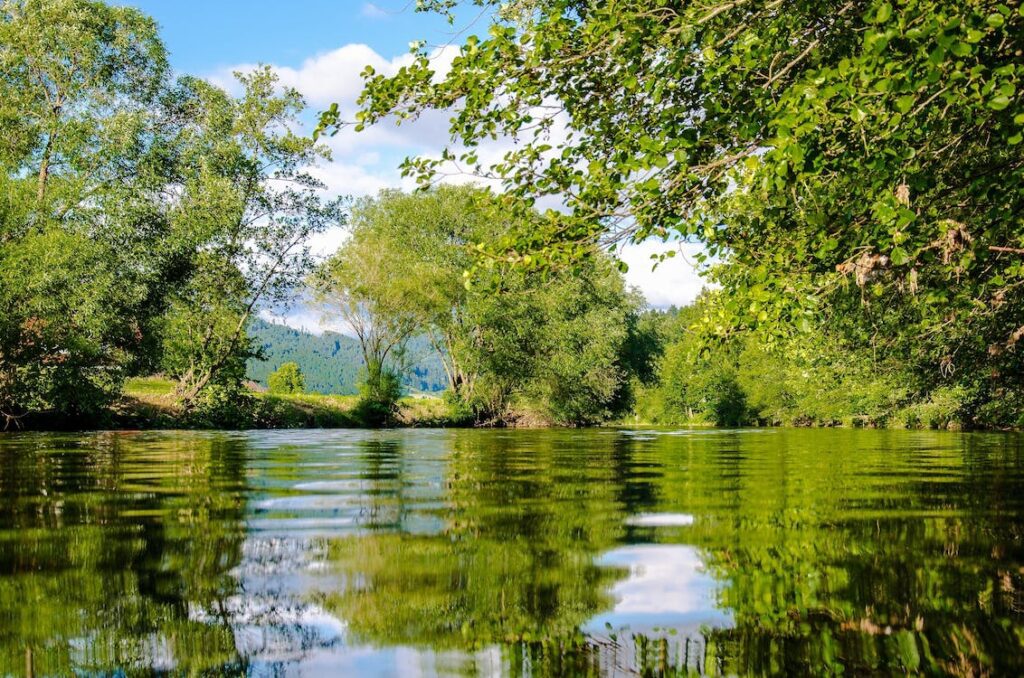
CocoWing EcoFlora’s Green Boundary Project offers a climate-smart, low-footprint, and impact-driven model that can complement and strengthen floodplain restoration efforts. Here’s how:
🌳 1. Strategic Groundwater Recharge
The three-layered plantation model—featuring deep-rooted trees, dense native shrubs, and flowering ground cover—mimics natural forest ecosystems. These layers promote infiltration of rainwater, reduce surface runoff, and enable long-term groundwater recharge.
🌿 2. Only 7 Feet Needed Along Boundaries
Unlike traditional afforestation models, this model can be implemented even in narrow strips (as little as 7 feet) along bunds, roadsides, canal edges, and fencing lines—making it ideal for encroachment-prone zones.
🌀 3. Pollution Buffer and Microclimate Regulation
Plants act as natural air and soil purifiers, absorbing heavy metals, particulate matter, and CO₂. They create shaded, humid microclimates that help resist heat and cold waves, important for both urban residents and nearby farmers.
👩🌾 4. Job Creation and Women’s Participation
The project creates green jobs for local communities, especially women, through nursery development, plantation, and maintenance. This aligns with the government’s Livelihood & Skill Development goals under Jal Shakti Abhiyan.
💰 5. Monetizable Ecosystem
By selecting mixed species with varied gestation cycles (some giving returns in 100 days, some in 1–5 years), this model can generate sustainable income for managing communities, making it economically self-sustaining in the long run.
Proposed Pilot Areas for Implementation
CocoWing’s model can be launched at:
- Yamuna Floodplain (near ITO, Geeta Colony, Sarai Kale Khan)
- Mundka Village Ponds
- Sanjay Lake
- Timarpur Lake
- Satpula Lake
- Kamla Nehru Ridge
- Multiple MCD ponds and school campuses
These areas already face severe ecological degradation and need urgent, cost-effective greening strategies that can work with limited space and fragmented land holdings.
A Vision Aligned with PM Narendra Modi’s Mission
Prime Minister Narendra Modi’s vision for sustainable development under schemes like Atal Bhujal Yojana, Mission Amrit Sarovar, and Mission LiFE emphasizes community-driven, climate-resilient solutions. CocoWing’s work directly supports these goals by:
- Restoring floodplain health
- Promoting groundwater conservation
- Creating green jobs for women
- Mobilizing youth and institutions
Conclusion: The Time to Act Is Now
The Yamuna floodplain cannot wait. We are at an inflection point, where climate risk and urban growth are clashing at the cost of Delhi’s water future. Strategic, layered plantation efforts like CocoWing’s offer a replicable, scientific, and inclusive way forward.
With the right partnerships and departmental alignment, Delhi can become a model of river-centric urban resilience—but the work must begin now.