
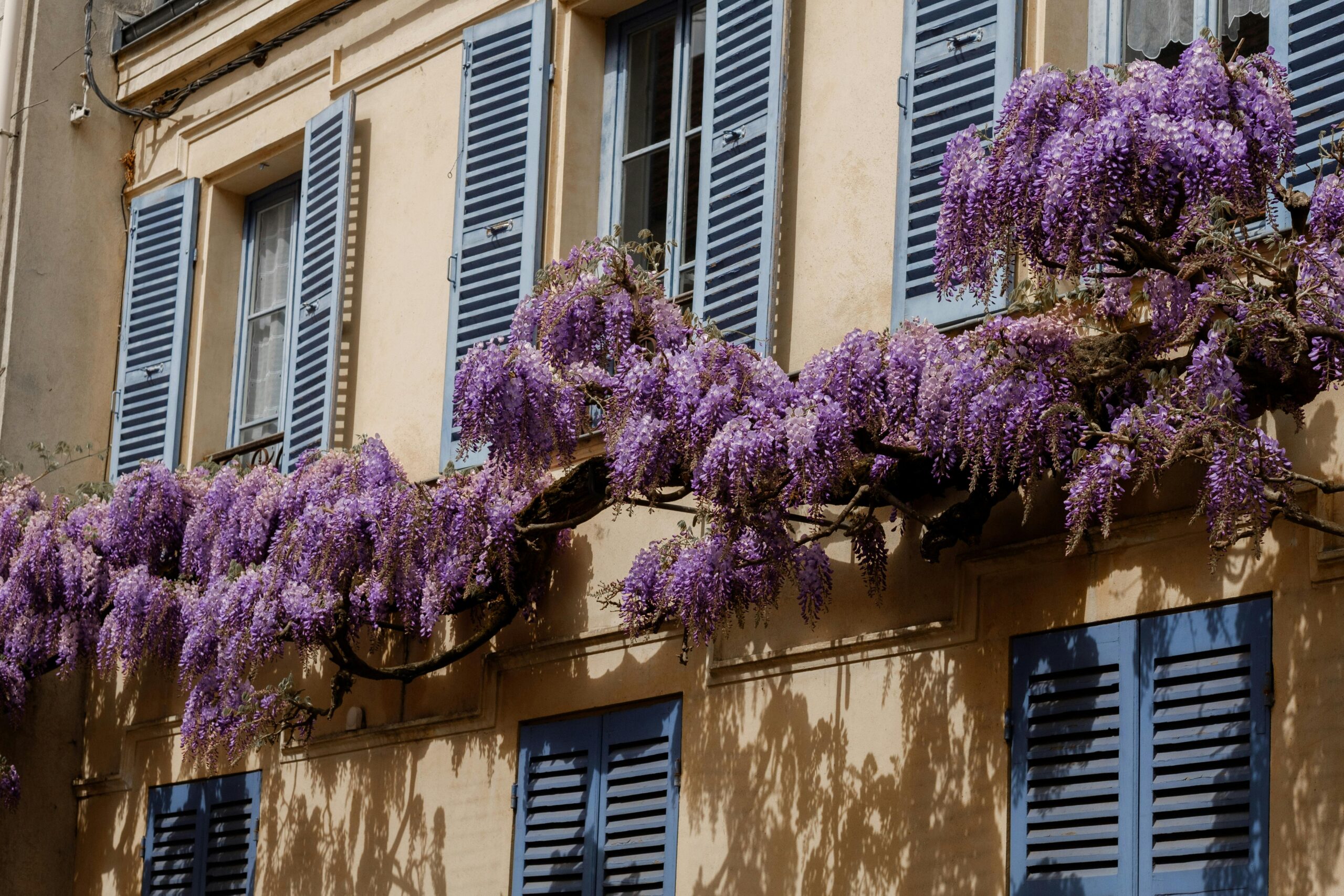
Few garden sights are as breathtaking as a mature wisteria in full bloom, its pendulous clusters of lavender, blue, or white flowers cascading down like floral waterfalls. Wisteria is a plant that rewards patience — it can take a few years to bloom, but when it does, the result is nothing short of spectacular. Its natural charm makes it a favorite for draping over pergolas, arches, trellises, and fences, creating a magical, storybook feel in any outdoor space.
In addition to its visual impact, wisteria is beloved for its sweet fragrance, which perfumes the entire garden when in bloom. But make no mistake — this is a vigorous climber that requires training and thoughtful care.
🌸 Season & Blooming
Wisteria typically blooms in spring to early summer, depending on the variety. Chinese wisteria (Wisteria sinensis) usually flowers slightly earlier than Japanese wisteria (Wisteria floribunda). The blooms appear before the foliage fully unfurls, creating a striking display of dangling flower clusters against bare branches.
Once established, wisteria can produce flowers reliably every year, but it’s important to note that some young plants may take 3–4 years before they bloom. To encourage earlier flowering, gardeners often choose grafted plants, which flower sooner than seed-grown vines. Deadheading is generally unnecessary, but light pruning after flowering helps stimulate more blooms the following year.
🌍 Soil & Planting
Wisteria thrives in moist, well-drained soil enriched with compost or aged manure. It prefers slightly acidic to neutral soil (pH 6.0–7.0). Avoid overly rich soil with high nitrogen, as this can promote leafy growth at the expense of flowers.
When planting, dig a wide hole and amend the soil with CocoWing Talking Soil to provide balanced nutrition and a strong start for root establishment. Because wisteria is a long-term investment, choose a permanent location with plenty of space and a sturdy support structure in place — the mature vine becomes quite heavy.
☀️ Sunlight & Watering
For maximum flowering, wisteria needs full sun — at least 6 hours a day. Although it can tolerate partial shade, too little sunlight will reduce blooming dramatically.

Watering is crucial during the first few growing seasons to establish deep roots. Once established, wisteria is fairly drought-tolerant, but deep watering during prolonged dry spells helps keep the plant healthy and flowering. Avoid constant shallow watering, which can lead to weak root systems. Mulching around the base conserves moisture and regulates soil temperature, especially in hot summers.
✂️ Maintenance & Pruning
Maintenance is where wisteria care becomes both an art and a science. Regular pruning is essential not only to keep the plant under control but also to encourage flowering. Wisteria vines can grow several meters in a single season, so training them early on a trellis, arbor, or pergola is critical.
Prune wisteria twice a year — once in late winter (February) to cut back the previous year’s growth to 2–3 buds, and again in mid-summer to control rampant shoots. This routine redirects the plant’s energy toward producing blooms rather than excessive foliage. Remove any suckers or unwanted side shoots to maintain the desired shape and prevent the vine from overwhelming nearby structures.
Propagation can be done by layering, softwood cuttings, or purchasing grafted plants from a nursery for quicker blooms.
🐛 Pests & Problems
Wisteria is generally resilient but can occasionally face pests like aphids, scale insects, or mealybugs. These can be managed with neem oil sprays or insecticidal soap. In heavy clay soils with poor drainage, root rot can be a concern — planting in raised beds or improving soil structure with Talking Soil can prevent this.
Some gardeners worry about non-blooming wisteria. The solution often lies in proper pruning, sufficient sunlight, and avoiding high-nitrogen fertilizers. Stressed or overfed vines may delay flowering, so balancing care is key.
🌼 Benefits & Uses
Wisteria is primarily a decorative plant, but its uses in garden design are unmatched. It creates natural shade over pergolas, adds romance to fences and archways, and frames patios beautifully. When in bloom, it turns any outdoor gathering space into a show-stopping venue.
Wisteria flowers are also pollinator-friendly, attracting bees and butterflies. They add value to the landscape by improving visual appeal, creating privacy screens, and even slightly cooling garden spaces by providing shade in summer.
🌱 Talking Soil Tip
Feeding wisteria in spring with CocoWing Talking Soil helps maintain steady, organic growth without overwhelming the plant with nitrogen. This encourages balanced development — strong vines but plenty of flower buds for the season.