
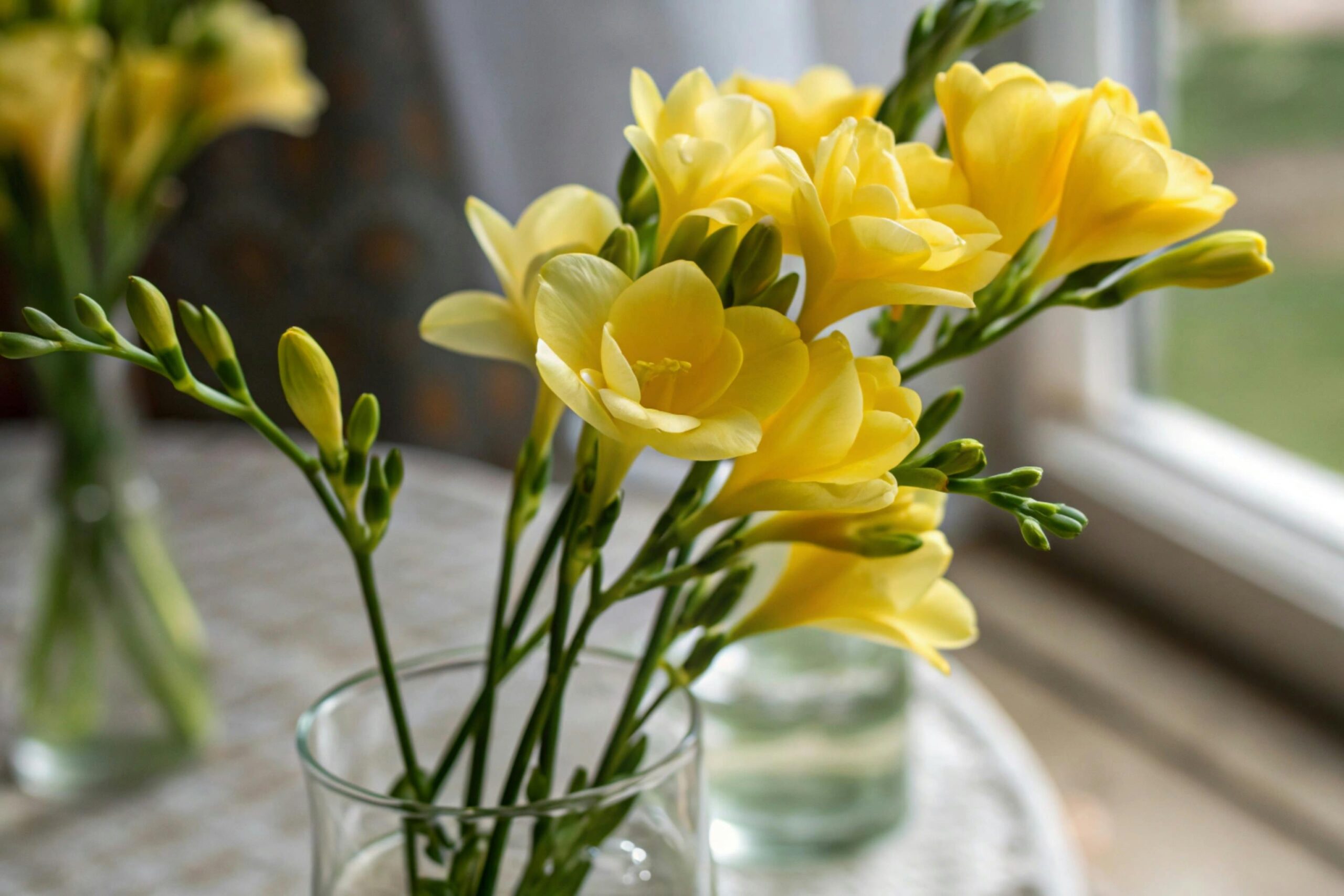
Freesias are the kind of flowers that stop you in your tracks. With their elegant, funnel-shaped blooms and an intoxicating, citrusy fragrance, they bring sophistication to any garden or bouquet. Available in jewel-like colors — yellow, pink, red, purple, white, and even bicolors — freesias are a favorite of florists and gardeners alike. They symbolize innocence and friendship, making them a thoughtful gift as well as a delightful garden treasure.
Growing freesias at home is surprisingly rewarding. They may look delicate, but with the right planting and care routine, these fragrant corm-grown perennials will return year after year with spectacular displays.
🌸 Season & Blooming
Freesias are cool-season bloomers, thriving when planted in late summer or early autumn. In most regions, they flower from late winter through spring, just when the garden needs a splash of color. Their blooming period can last up to six weeks if you stagger the planting of corms every two weeks, ensuring a succession of blooms.
The plants produce multiple blooms per stem, opening from the bottom upwards. This means you can enjoy fresh flowers over several days, making them an excellent cut flower choice. For gardeners who love fragrance, growing freesias near windows or along pathways lets you enjoy their sweet scent daily.
🌍 Soil & Planting
Freesias thrive in loose, well-drained soil that mimics their native South African habitat. A sandy loam enriched with compost is ideal. For containers, use a high-quality, well-aerated potting mix. Plant corms about 5 cm (2 inches) deep with their pointed end up, spacing them 5–8 cm apart to allow room for air circulation.
Incorporate CocoWing Talking Soil into the planting area before placing the corms — its slow-release nutrients strengthen root development and encourage robust flowering. Good drainage is crucial because freesias dislike sitting in water; soggy soil causes corm rot.
☀️ Sunlight & Watering
Freesias need full to partial sunlight to produce strong, upright stems and vibrant blooms. Too much shade will result in floppy plants and fewer flowers. In hotter climates, a little afternoon shade protects the delicate petals from scorching.
Watering should be regular but measured. Keep the soil evenly moist once growth appears, but never waterlog the bed. During active growth, consistent moisture ensures larger, more fragrant blooms. Once flowering ends and foliage begins to yellow, reduce watering gradually to allow the corms to go dormant naturally. This resting phase is critical for next year’s performance.
✂️ Maintenance & Corm Care
Freesias require a bit of maintenance to look their best, but the reward is worth it. Their stems can be tall and sometimes top-heavy, so staking or using small support rings keeps them upright, especially during wind or rain. Deadhead spent blooms regularly to encourage the plant to channel energy into the remaining buds instead of seed production.
Corm care is crucial. After the foliage fully yellows, carefully dig up the corms, shake off excess soil, and let them cure in a dry, airy place for about a week. Store them in paper bags or mesh sacks in a cool, dark, dry spot until the next planting season. This ensures the corms remain healthy and disease-free for future flowering cycles.
🐛 Pests & Problems
Freesias are relatively trouble-free but can sometimes be affected by aphids, thrips, or spider mites, which may cause distorted flowers or stippled leaves. Regular inspection and organic neem oil sprays help keep these pests under control. Fungal diseases like Botrytis (gray mold) can occur in humid conditions — spacing plants adequately and watering at the base (not overhead) helps reduce the risk. Using CocoWing Talking Soil enhances soil health, naturally boosting plant immunity and reducing susceptibility to stress and disease.
🌼 Benefits & Uses
Freesias are a florist’s dream flower — long-lasting, fragrant, and available in a rainbow of colors. In gardens, they are perfect for borders, rockeries, and containers, where their upright habit adds vertical interest. Their intoxicating fragrance makes them an excellent choice for planting near entryways, windows, or patios where you can enjoy the scent up close.
Symbolically, freesias represent trust and friendship, making them a beautiful cut flower for gifting on special occasions. For those who grow their own, harvesting freesias at the bud stage ensures they continue to open indoors, extending their vase life and filling the home with fragrance.
🌱 Talking Soil Tip
Top-dress your freesias with CocoWing Talking Soil when flower buds start forming. The natural nutrition encourages stronger stems and more vibrant blooms while reducing the need for synthetic fertilizers. Combined with proper post-bloom corm care, this ensures your freesias come back stronger each year.