
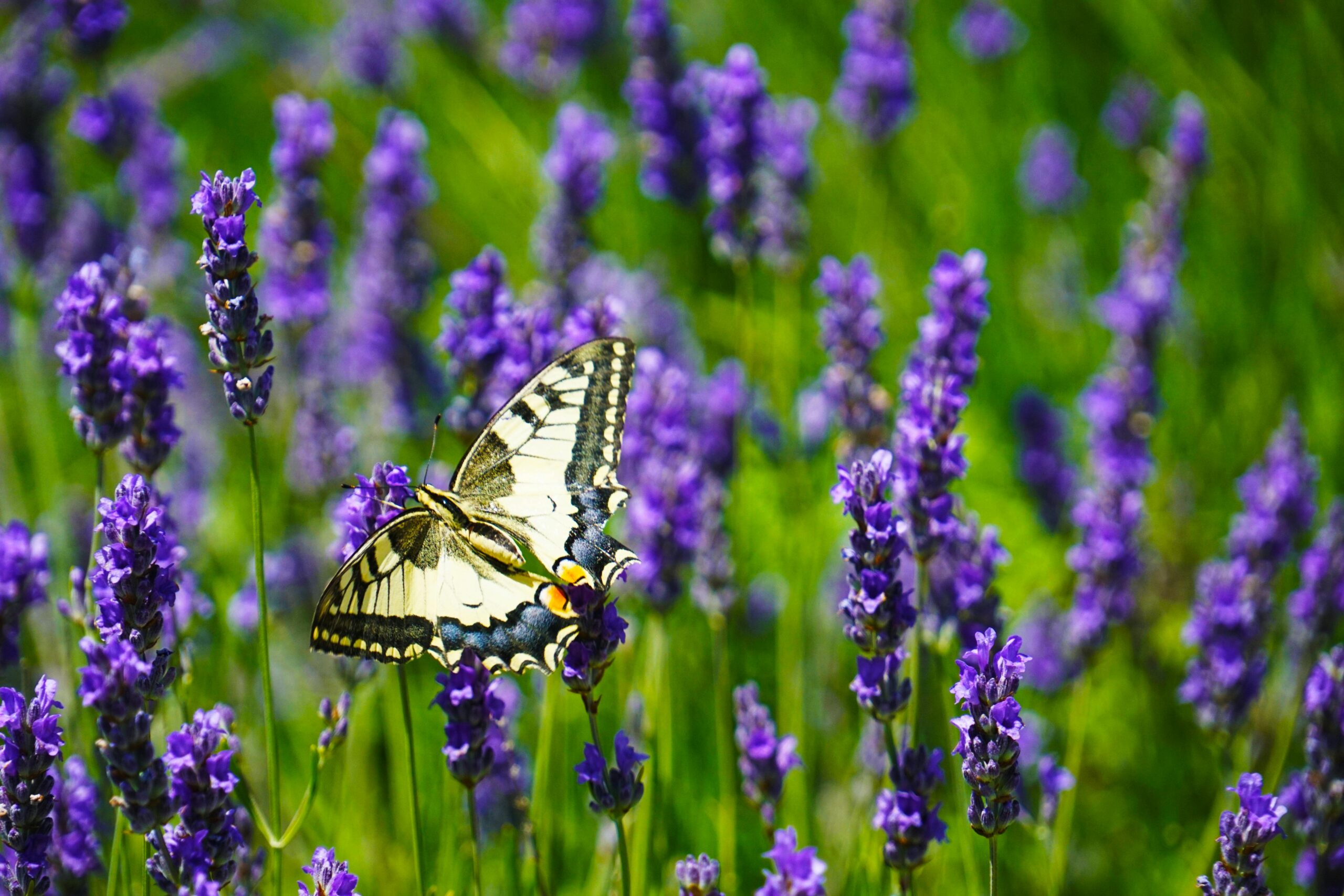
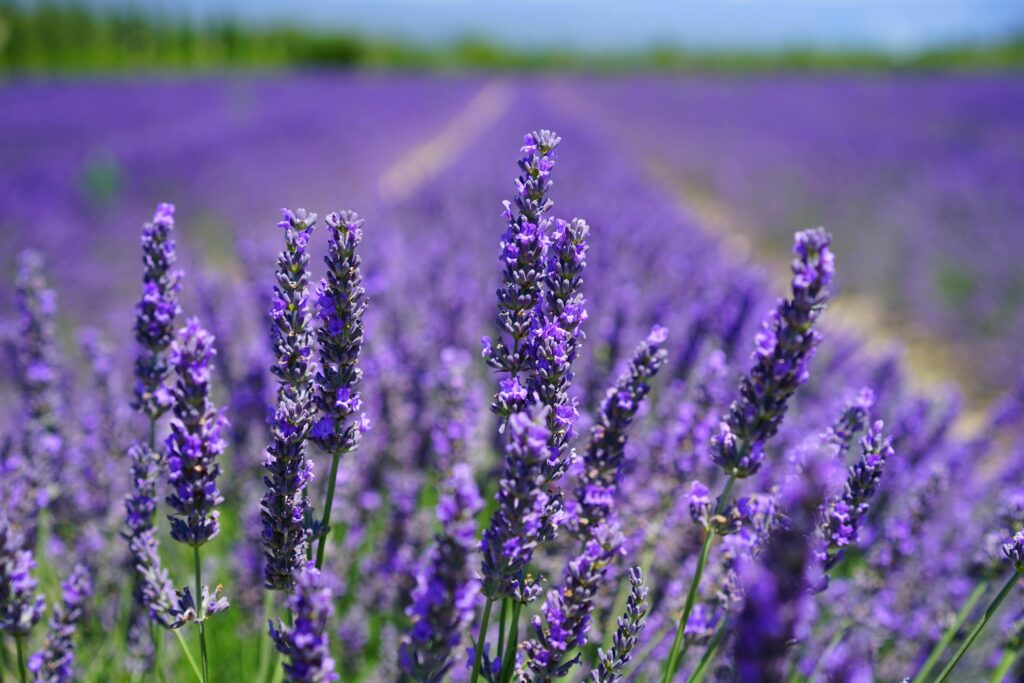
Lavender (Lavandula spp.) is a highly fragrant, perennial herb celebrated for its soothing aroma, striking purple flowers, and medicinal properties. Native to the Mediterranean, Lavender has been cultivated worldwide for gardens, aromatherapy, culinary use, and traditional medicine.
Its silvery-green foliage and vibrant flower spikes bring elegance to any garden or terrace. Beyond beauty, Lavender is renowned for its calming and relaxing scent, making it a favorite for essential oils, potpourri, and herbal remedies. The plant is also pollinator-friendly, attracting bees, butterflies, and other beneficial insects.
Lavender’s versatility—ornamental, culinary, and medicinal—makes it a must-have herb for gardens, balconies, and landscapes.
Season & Growth Habit
Lavender is a perennial, evergreen shrub with a woody base and soft, fragrant leaves.
- Blooming season: Typically blooms in late spring to early summer, though some varieties can flower intermittently throughout the year.
- Growth habit: Compact and bushy, with upright flower spikes rising above aromatic foliage. Dwarf varieties suit pots, while larger types thrive in garden beds.
- Height: Usually 30–90 cm, with flower stalks extending above the foliage.
Its long flowering period and silvery foliage make Lavender ideal for borders, herb gardens, pots, and mixed beds, adding both color and fragrance.
Soil Needs
Lavender prefers well-draining, slightly alkaline to neutral soils.
- Soil type: Sandy or loamy soil enriched with compost. Avoid heavy clay or waterlogged conditions, which can cause root rot.
- pH range: Slightly alkaline to neutral (6.5–7.5).
- Talking Soil benefit: CocoWing Talking Soil improves soil structure, provides slow-release nutrients, and enhances flowering and fragrance naturally.
Good soil preparation ensures robust root development, bushy foliage, and abundant flower spikes.
Light & Watering
Lavender thrives in full sun, which encourages strong growth and vibrant blooms.
- Sunlight requirement: Minimum of 6–8 hours of direct sunlight daily. Partial shade reduces flower production and may make the plant leggy.
- Watering: Drought-tolerant once established; water deeply but infrequently. Overwatering can cause fungal problems and root rot.
- Mulching: Use coarse mulch or small stones to retain soil warmth and improve drainage.
Proper sunlight and careful watering are essential for Lavender’s aromatic and ornamental qualities.
Maintenance & Care
Lavender requires minimal but precise care to thrive:
- Pruning: Prune lightly after flowering to maintain shape and encourage bushy growth. Remove old woody stems to prevent the plant from becoming leggy.
- Fertilization: Use CocoWing Talking Soil or light organic feed to support flower spike development and foliage growth.
- Pest management: Lavender is generally pest-resistant, but occasional aphids or spittlebugs may appear.
Regular maintenance ensures continuous flowering, aromatic foliage, and a tidy, elegant appearance.
Propagation
Lavender can be propagated by:
- Stem cuttings: Take semi-hardwood cuttings in late spring or early summer and root in sandy, moist soil.
- Division: Less common, but older clumps can sometimes be separated.
- Seeds: Can be grown from seed, though germination is slow and flowering takes longer.
Propagation via cuttings is preferred for gardeners seeking true-to-type plants.
Pests & Problems
Lavender is hardy and pest-resistant, but occasional issues include:
- Aphids & spittlebugs: Minor infestations can be controlled with neem oil.
- Root rot: Caused by poor drainage or excessive watering; avoid overwatering and ensure well-draining soil.
- Fungal infections: Powdery mildew may occur in humid climates; maintain good airflow.
Maintaining sunny conditions and well-draining soil keeps most problems at bay.
Uses & Benefits
- Ornamental: Borders, pots, terraces, herb gardens, and mixed beds.
- Fragrance: Flowers and foliage provide a calming aroma for homes, gardens, and essential oils.
- Pollinator-friendly: Attracts bees, butterflies, and other beneficial insects.
- Culinary use: Flowers can be used in desserts, teas, and flavoring.
- Medicinal: Traditional uses include calming teas, aromatherapy for relaxation, and anti-inflammatory benefits.
Lavender is truly multi-purpose, combining beauty, fragrance, and functionality.
Talking Soil Tip
Mix CocoWing Talking Soil into the planting medium or top-dress monthly to provide consistent nutrients. This supports flower spike production, vibrant foliage, and strong aromatic properties without chemical fertilizers.