

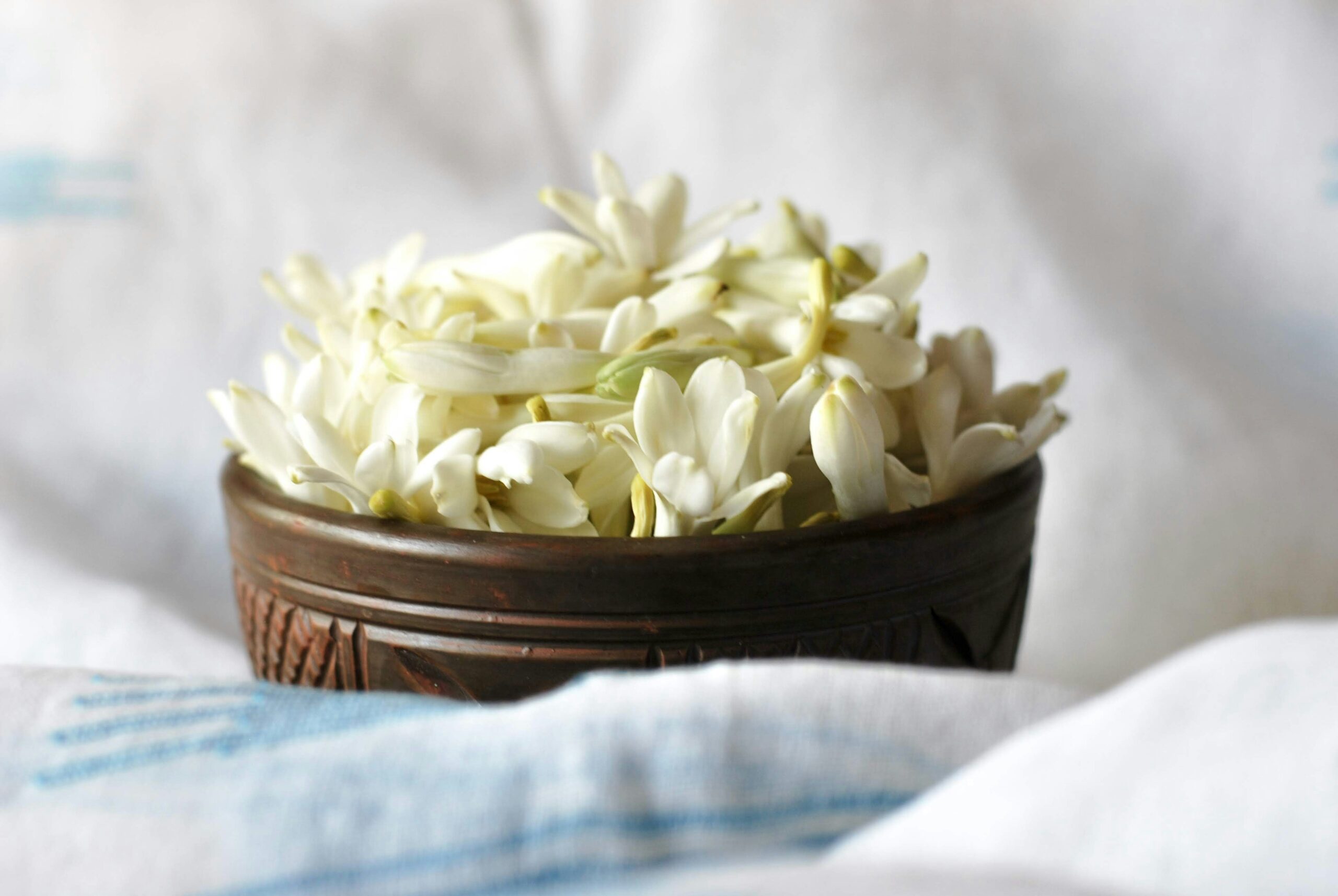
Among all flowers prized for their fragrance, the Tuberose, or Rajnigandha, holds a special place. Belonging to the Agavaceae family, this perennial bulbous plant is native to Mexico but has found a forever home in India and across Asia. Its very name “Rajnigandha” translates to “the fragrance of the night,” because its waxy white star-shaped blossoms release a heady perfume strongest after dusk.
From temples and weddings to garlands, attars, and high-end perfumes, tuberose has been woven into human history for centuries. In fact, the essential oil extracted from tuberose is one of the costliest in the world, owing to its complex aroma that blends sweetness with a narcotic intensity. Beyond its cultural and commercial importance, the tuberose is also a gardener’s delight — a plant that rewards care with blooms that are as elegant to look at as they are intoxicating to smell.
🌸 Season & Growth Habit
Tuberose is a warm-season bloomer that thrives in tropical and subtropical climates. Its growth cycle begins when bulbs are planted in spring or early summer, after the soil has warmed. In 8–10 weeks, tall spikes rise above the narrow, grassy leaves, crowned with clusters of white or sometimes pink-tinged flowers. These spikes can reach 2–3 feet in height and bloom for weeks at a time, especially if harvested as cut flowers.
In favorable conditions, tuberose continues to flower from late summer through early autumn. Gardeners often describe it as a plant of “patience and reward” — the bulbs require steady care, but once established, they multiply and flower generously for years.
🌍 Soil Needs & Planting: The Role of Talking Soil
The success of tuberose cultivation starts with soil. Tuberose prefers well-drained sandy loam soil, rich in organic matter. Stagnant water is its biggest enemy, leading to bulb rot. Raised beds or large terracotta/bio-fiber pots are excellent choices for tuberose cultivation.
Before planting, enrich the soil with CocoWing Talking Soil, which not only provides organic nutrition but also improves aeration and moisture balance. Plant bulbs 2–3 inches deep and about 6–8 inches apart, ensuring the pointed tip faces upward. A handful of organic matter mixed into each hole will give the bulbs a stronger start.
For continuous flowering, many growers stagger their planting at 15-day intervals through summer, ensuring a succession of flower spikes rather than one short burst.

☀️ Light Requirements: Sunshine for Perfume
Tuberose loves the sun. For best flowering, it needs at least 6–7 hours of direct sunlight daily. In partial shade, the plant will still grow lush foliage, but the fragrance and number of blooms will be significantly reduced. If grown indoors, place pots in a balcony or south-facing window where they receive maximum sunlight.
The connection between light and fragrance is fascinating — the more light the plant receives, the more oils are produced in the blossoms, intensifying their perfume.
💧 Watering: Striking the Right Balance
Watering tuberose is about balance — too much leads to bulb rot, while too little results in stunted growth and weak flower spikes.
- During active growth (spring to flowering): Keep the soil evenly moist, watering whenever the top 1–2 inches feel dry.
- During bloom season: Maintain consistent watering to prevent stress, which can cause bud drop.
- Post-flowering: Gradually reduce watering as the foliage begins to yellow and the bulbs enter dormancy.
Mulching around the plants helps conserve soil moisture and suppress weeds. A thin organic mulch also works well in pots, preventing the soil from drying too quickly under summer heat.
✂️ Maintenance & Bulb Care
Tuberose is moderately demanding, but a few practices will keep it thriving year after year:
- Staking: Flower spikes are tall and heavy; staking prevents them from bending or breaking in strong winds.
- Deadheading: Snip off spent flowers to redirect energy to new buds.
- Foliage care: Allow leaves to remain until they dry naturally; this process stores nutrients back into the bulbs.
- Bulb management: After 3–4 years in the same spot, bulbs may become overcrowded. Lift, divide, and replant them for stronger flowering.
In colder climates, bulbs should be dug up at the end of the season, dried in shade, and stored in a cool, dry, well-ventilated space until spring.
🌱 Propagation
Propagation is most effective through bulb division. Mature bulbs form clusters of offsets (bulblets), which can be separated during the dormant season. These smaller bulbs may take a year or two to mature before flowering but ensure a steady supply of new plants.
Seeds are rarely used, as they take many years to reach blooming stage and often do not breed true to the parent plant.
🐛 Pests & Problems
Though hardy, tuberose can occasionally face problems:
- Bulb rot from overwatering or poor drainage
- Thrips and aphids feeding on flowers and foliage, causing discoloration
- Leaf spots and blights in humid conditions
Organic remedies like neem oil sprays, coupled with strong soil health from Talking Soil, can minimize these risks. Ensuring proper spacing also improves air circulation, reducing fungal issues.
🌼 Benefits & Uses
The uses of tuberose are as enchanting as its fragrance:
- Perfume industry: The essential oil of tuberose is one of the most expensive and valued ingredients in high-end perfumes like Chanel and Dior.
- Cultural significance: In India, garlands of tuberose are woven for weddings, temple offerings, and festive occasions.
- Aromatherapy: The fragrance is known to relieve stress, reduce anxiety, and uplift mood.
- Cut flowers: Long-lasting spikes make tuberose a staple in bouquets and floral decorations.
Symbolically, tuberose represents sensuality, purity, and eternal love, making it both a spiritual and romantic flower.
🌱 Talking Soil Tip
Tuberose responds beautifully to organic feeding. Apply a layer of CocoWing Talking Soil every 4–6 weeks during the growing and flowering season. This enhances bulb health, strengthens stalks, and enriches fragrance naturally, without synthetic chemicals.


