
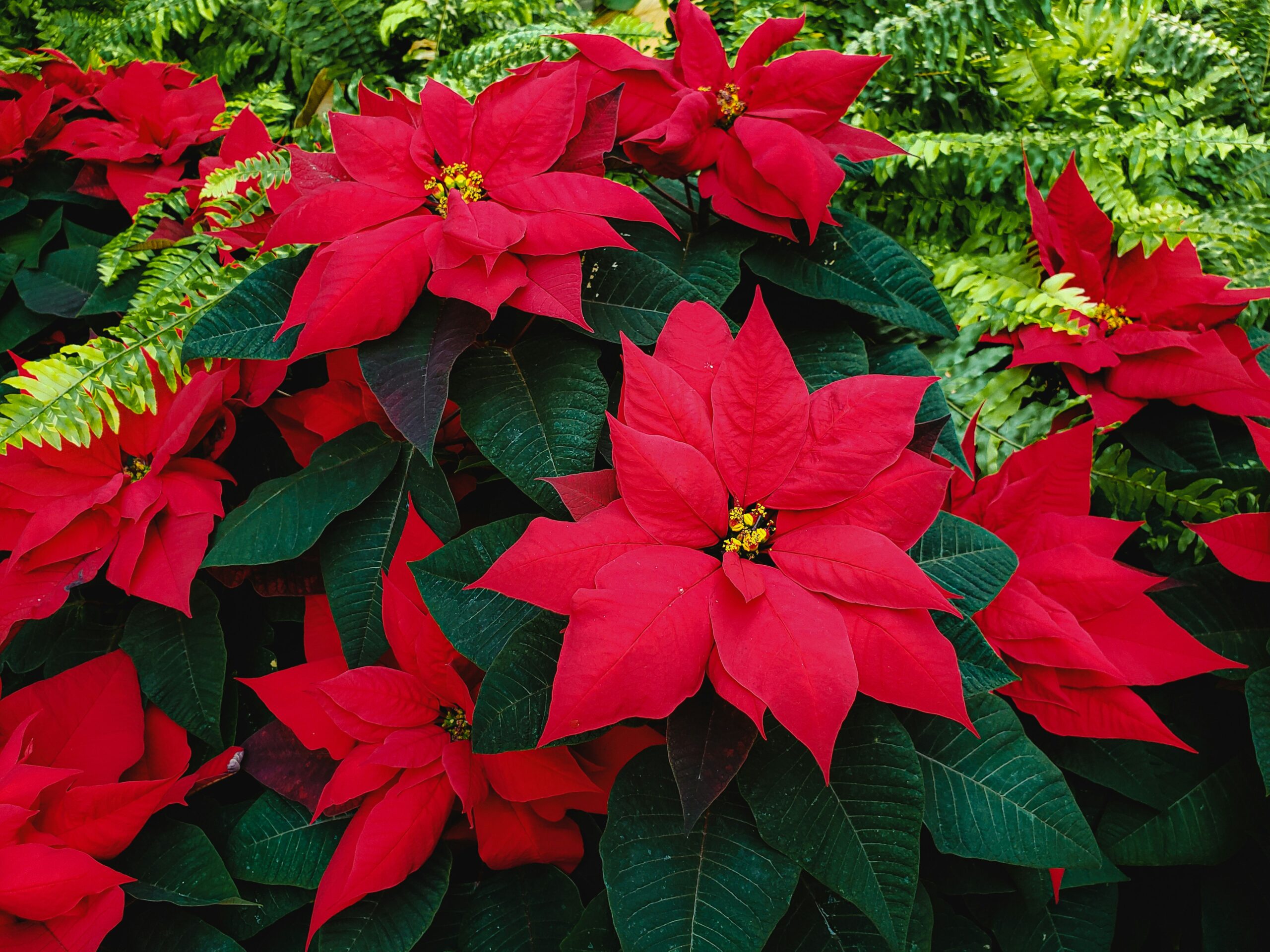
The Poinsettia (Euphorbia pulcherrima) is one of the most recognizable ornamental plants in the world. Known as the “Christmas Star”, it owes its fame to its vibrant red bracts (modified leaves) that resemble flower petals. While often associated with holiday décor in the West, in tropical regions like India, poinsettias are grown as perennial shrubs, brightening gardens and balconies long after the festive season ends.
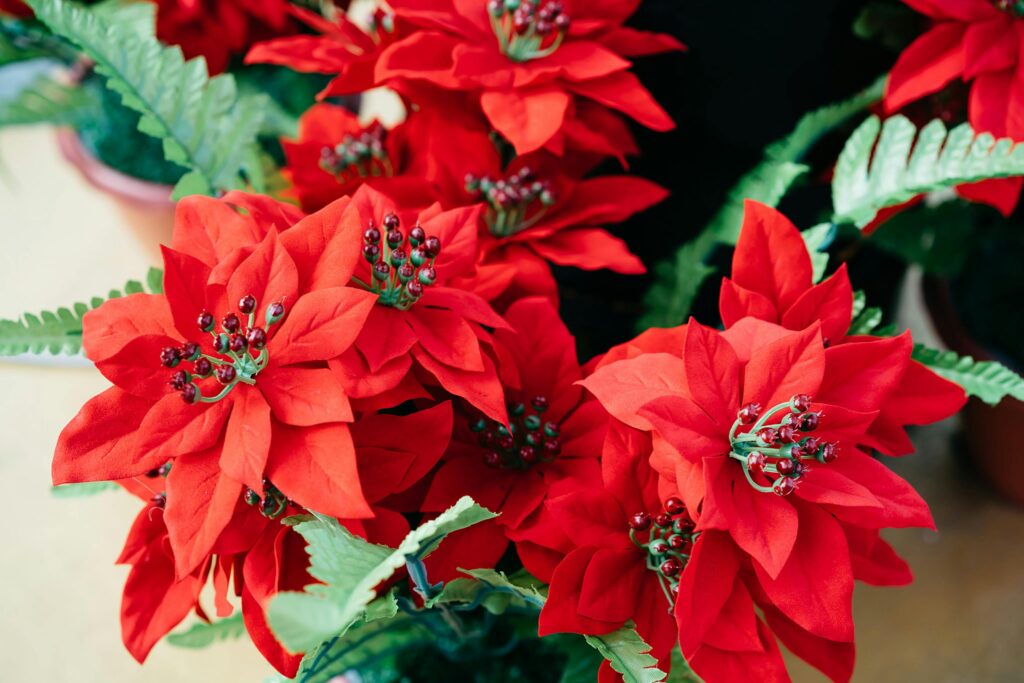
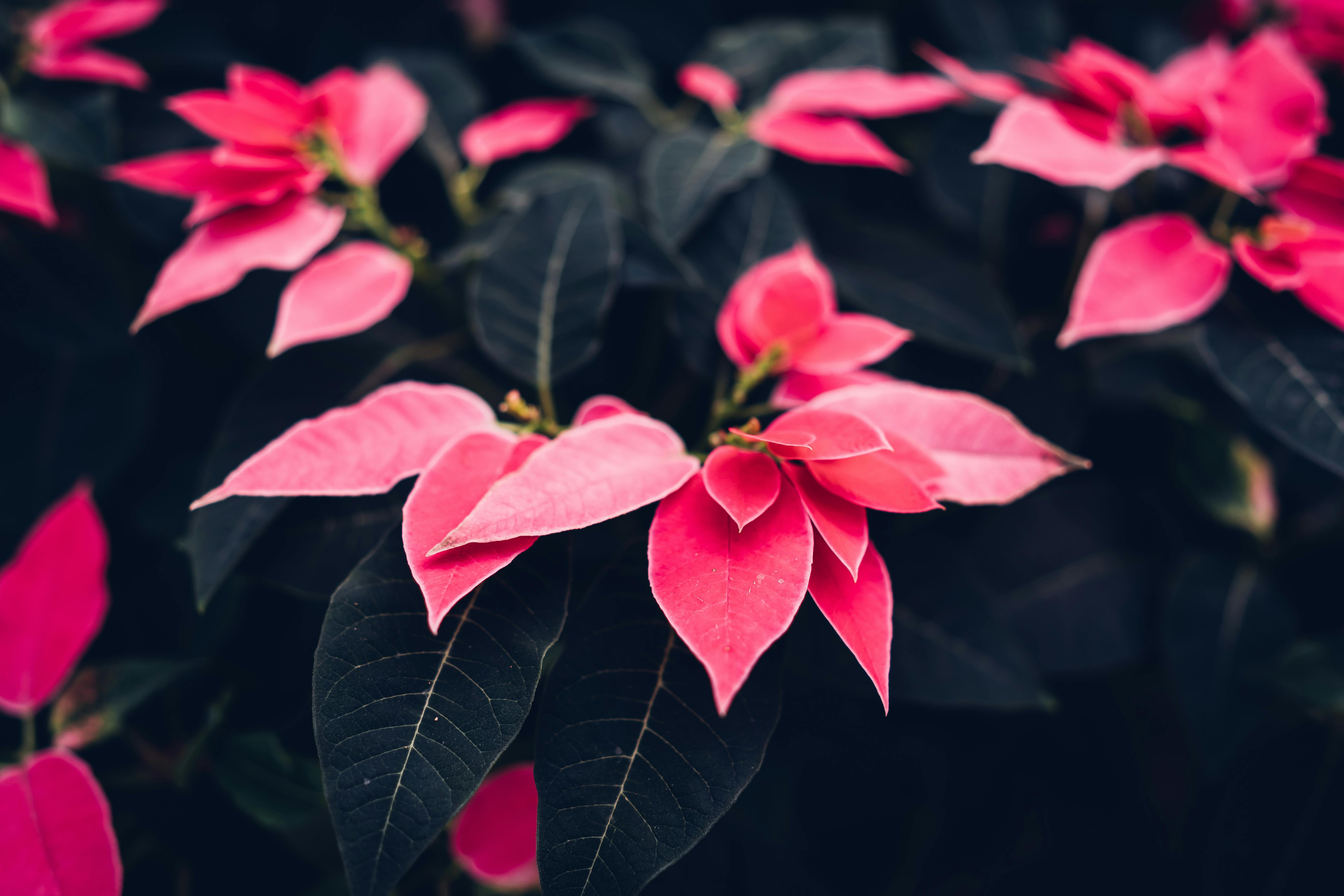
Native to Mexico, where the plant was considered sacred by the Aztecs, the poinsettia has a rich history. Its red bracts were once used for making dye and its sap in medicinal treatments. Today, it is admired for its symbolism of purity, joy, and celebration. Though most commonly red, poinsettias now come in many shades including white, pink, marbled, and even golden hues — making them a versatile choice for gardeners and landscapers.
🌸 Season & Growth Habit
Poinsettia is a perennial shrub, typically reaching 2–4 meters in height in its natural habitat, though container-grown plants remain smaller and bushier. Its striking display of color comes not from flowers but from its colored bracts, which surround the tiny, yellow-green central flowers.
In India, poinsettias bloom naturally in winter (November to January), when shorter daylight hours trigger bract coloration. With proper care, however, they can be pruned and trained to produce multiple flushes of colorful bracts, extending their ornamental value throughout the year.
🌍 Soil Needs & Planting
Poinsettias thrive in well-drained, loamy soil enriched with organic matter. Heavy clay or waterlogged soils must be avoided, as they cause root rot. A soil pH between 5.5 and 6.5 is ideal.
When planting in containers, a soil mix of garden soil + sand + compost (in a 2:1:1 ratio) works best. Incorporating CocoWing Talking Soil ensures long-term fertility, improves drainage, and enhances root aeration, which is crucial for healthy growth.
For garden beds, raised planting with Talking Soil amendments helps prevent compaction and creates a nutrient-rich environment for flourishing poinsettias.
☀️ Sunlight & Watering
Poinsettias demand bright, indirect light to thrive. Outdoors, they do best in partial shade — too much direct afternoon sun can scorch the bracts, while deep shade reduces color intensity. Indoors, they should be placed near a well-lit window but kept away from drafts and heaters.
Watering must be consistent but moderate. The soil should remain moist, not soggy. Overwatering causes yellowing leaves and root rot, while underwatering leads to leaf drop. A good practice is to check the top inch of soil — if it feels dry, water thoroughly until it drains out of the pot. Mulching around outdoor plants helps maintain steady soil moisture.
✂️ Maintenance & Care
While poinsettias are famous as “holiday plants,” keeping them healthy year-round requires thoughtful care:
- Pruning: After the bracts fade (around February), cut the plant back to about 8–12 inches to encourage bushy new growth. Regular pinching of tips through summer ensures a fuller shape.
- Feeding: Apply CocoWing Talking Soil or a balanced organic fertilizer every 6–8 weeks to sustain lush growth.
- Light cycle control: To trigger bract coloration, poinsettias need short-day conditions (about 14 hours of darkness daily) starting in October. This can be mimicked by covering the plant or placing it in a dark room each evening.
- Repotting: Every 2–3 years, repot poinsettias into slightly larger containers with refreshed Talking Soil mix to prevent root binding.
🌱 Propagation
Poinsettias are most commonly propagated through stem cuttings taken during late spring or early summer. Cuttings should be 4–6 inches long, dipped in rooting hormone, and planted in a moist, sandy medium. Once rooted, they can be transplanted into individual pots.
Propagation by seed is rare in home gardens, as it takes longer and does not guarantee true-to-type plants.
🐛 Pests & Problems
Though relatively hardy, poinsettias are prone to a few pests and diseases:
- Whiteflies and aphids suck sap from tender leaves.
- Spider mites cause stippling and leaf yellowing.
- Fungal diseases such as root rot appear in poorly drained soil.
- Leaf drop is a common issue due to stress from overwatering, sudden temperature changes, or low humidity.
Preventive care includes regular inspection, maintaining moderate humidity, and using CocoWing Talking Soil to strengthen root health.
🌼 Benefits & Uses
Poinsettias go far beyond holiday decoration — they hold ornamental, symbolic, and even ecological importance:
- Ornamental beauty: A centerpiece plant for gardens, balconies, and indoor décor.
- Cultural symbolism: Represents joy, celebration, and the festive spirit; often gifted during Christmas.
- Air quality: Like many Euphorbias, poinsettias help improve indoor air quality.
- Eco-value: Bracts attract pollinators such as bees and butterflies in garden settings.
- Diversity of colors: Available in red, pink, white, and variegated forms, offering versatility in landscape design.
🌱 Talking Soil Tip
For vibrant bract coloration and year-round health, mix CocoWing Talking Soil into your poinsettia beds or containers. Its organic nutrition supports steady growth, enhances color intensity, and reduces the risk of stress-related leaf drop.