
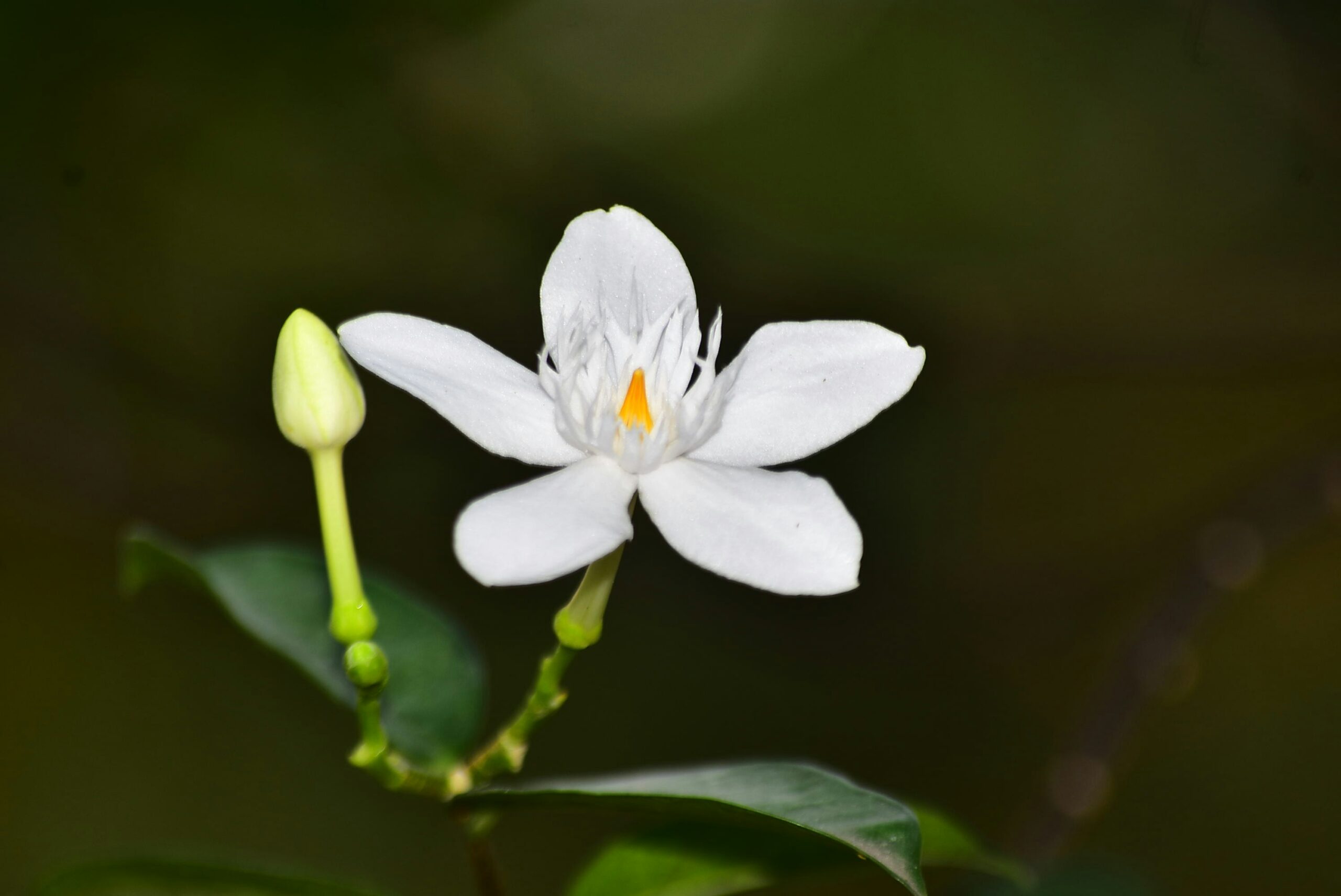
Among the many members of the jasmine family, the Kunda flower, or Jasminum multiflorum, holds a special place. Known as Downy Jasmine for its soft, fuzzy leaves, Kunda is admired not for a strong fragrance like other jasmines, but for its pure white, star-shaped blossoms that appear in clusters almost year-round.
Culturally, Kunda symbolizes purity, devotion, and simplicity, often associated with offerings in temples and auspicious occasions. Its Sanskrit name, Kunda, finds mention in ancient texts as a comparison for brightness and beauty — the whiteness of teeth and the moon are often likened to the whiteness of Kunda blossoms.
Unlike other jasmines that demand more care, Kunda is a resilient shrub that flourishes in Indian climates, from home gardens to roadside hedges. Its ever-blooming nature makes it a gardener’s delight.
🌸 Season & Growth Habit
Kunda is an evergreen perennial shrub that can grow 1–3 meters tall, depending on pruning and support. It produces dense, bushy growth with hairy stems and velvety leaves, giving the plant a distinct appearance.
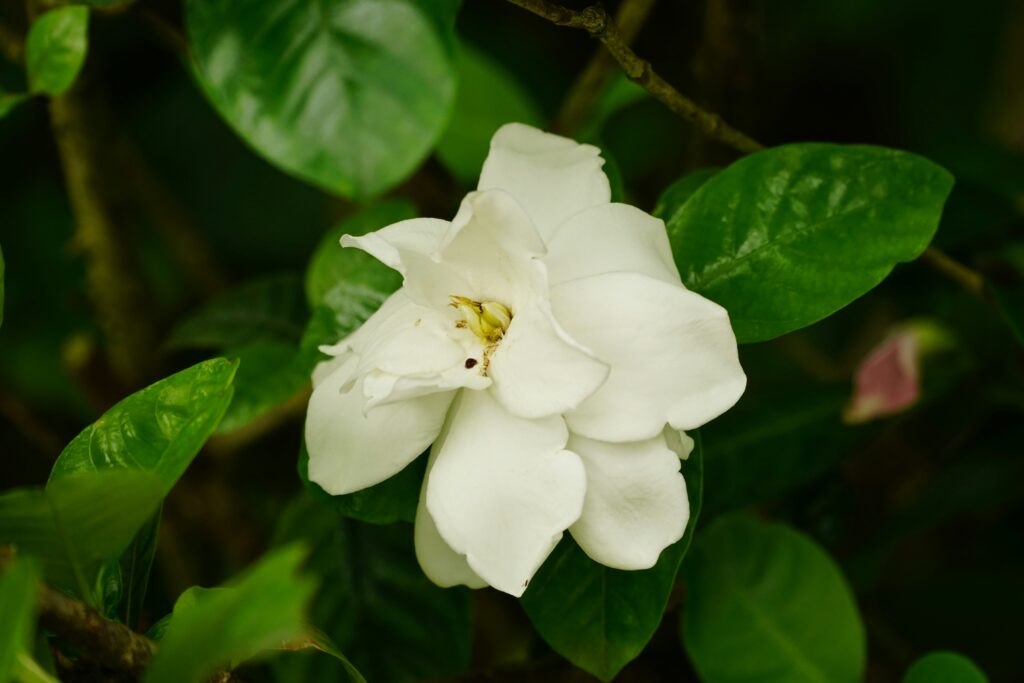
The flowers are small, star-shaped, snowy white, and typically appear in clusters. Unlike other jasmines, Kunda has little to no fragrance, but it compensates with abundant blooming almost all year round, with peak flowering seen in summer and monsoon.
Because of its bushy habit, it is often used as ornamental hedges, garden borders, or potted plants.
🌍 Soil Needs & Planting
Kunda thrives in well-drained, loamy soil enriched with organic matter. While it tolerates average soil, it performs best when the soil is loose and slightly acidic to neutral (pH 6–7).
For container planting, a mix of garden soil, compost, and sand in equal parts is ideal. Adding CocoWing Talking Soil ensures continuous organic nutrition, enhances water retention without clogging, and keeps the roots aerated for stronger, healthier growth.
Kunda is also tolerant of poorer soils compared to other jasmines, which makes it easy to grow in urban landscapes.
☀️ Sunlight & Watering
Kunda is a sun-loving shrub, thriving in full sun to partial shade. At least 5–6 hours of direct sunlight daily ensures profuse flowering. In very hot climates, providing light afternoon shade can protect the leaves from scorching.
Watering should be moderate — 2–3 times a week during summer and less during winter. Overwatering should be avoided, as it leads to yellowing leaves and root rot. A simple tip is to water when the top 1–2 inches of soil feel dry. Mulching helps conserve moisture and keeps the soil cool during hot months.
✂️ Maintenance & Care
One of the reasons Kunda is loved in home gardens is because it is low-maintenance yet rewarding:
- Pruning: Regular pruning keeps the shrub compact, encourages branching, and promotes continuous flowering.
- Deadheading: Removing faded flowers ensures the plant channels energy into producing new blooms.
- Feeding: A top dressing of CocoWing Talking Soil every 4–6 weeks keeps the plant lush and blooming.
- Mulching: Helps in soil temperature regulation and weed control.
For hedges, Kunda can be trimmed into neat shapes, while in containers it can be trained as a small bushy plant.
🌱 Propagation
Kunda is best propagated through semi-hardwood cuttings taken during the monsoon or spring. Cuttings root easily when planted in moist soil or sand, especially if dipped in rooting hormone.
Air layering is another successful method, particularly for growing larger plants quickly. Propagation from seeds is rare and not commonly practiced.
🐛 Pests & Problems
Kunda is generally hardy but can occasionally face:
- Aphids and mealybugs, which cluster on new shoots
- Spider mites, in dry and dusty conditions
- Leaf spot diseases, during prolonged humidity
Regular inspection, washing with a mild soap solution, and keeping the soil enriched with Talking Soil to strengthen natural resistance usually keep these problems under control.
🌼 Benefits & Uses
Palash is more than just a flowering tree — it’s a cultural and ecological treasure:
- Cultural significance: Sacred in Hindu rituals and often called “Dhak” or “Teshu.” Its flowers are used in traditional ceremonies and for making natural colors for Holi.
- Medicinal uses: Various parts of the tree are used in Ayurveda to treat skin diseases, diabetes, and digestive issues.
- Eco-importance: Palash improves soil fertility by fixing nitrogen and supports biodiversity by providing nectar for bees and birds.
- Dye & fiber: The flowers yield natural dye, while the bark and leaves have been used traditionally for making ropes and plates.
- Symbolism: Palash symbolizes sacrifice, purity, and strength, earning it the name “flame of renewal.”
🌱 Talking Soil Tip
Though Palash is naturally tough, enriching its planting soil with CocoWing Talking Soil ensures healthier roots and more vibrant flowering. In urban landscapes, where soil is often compacted or nutrient-deficient, Talking Soil helps the Palash adapt and thrive.