
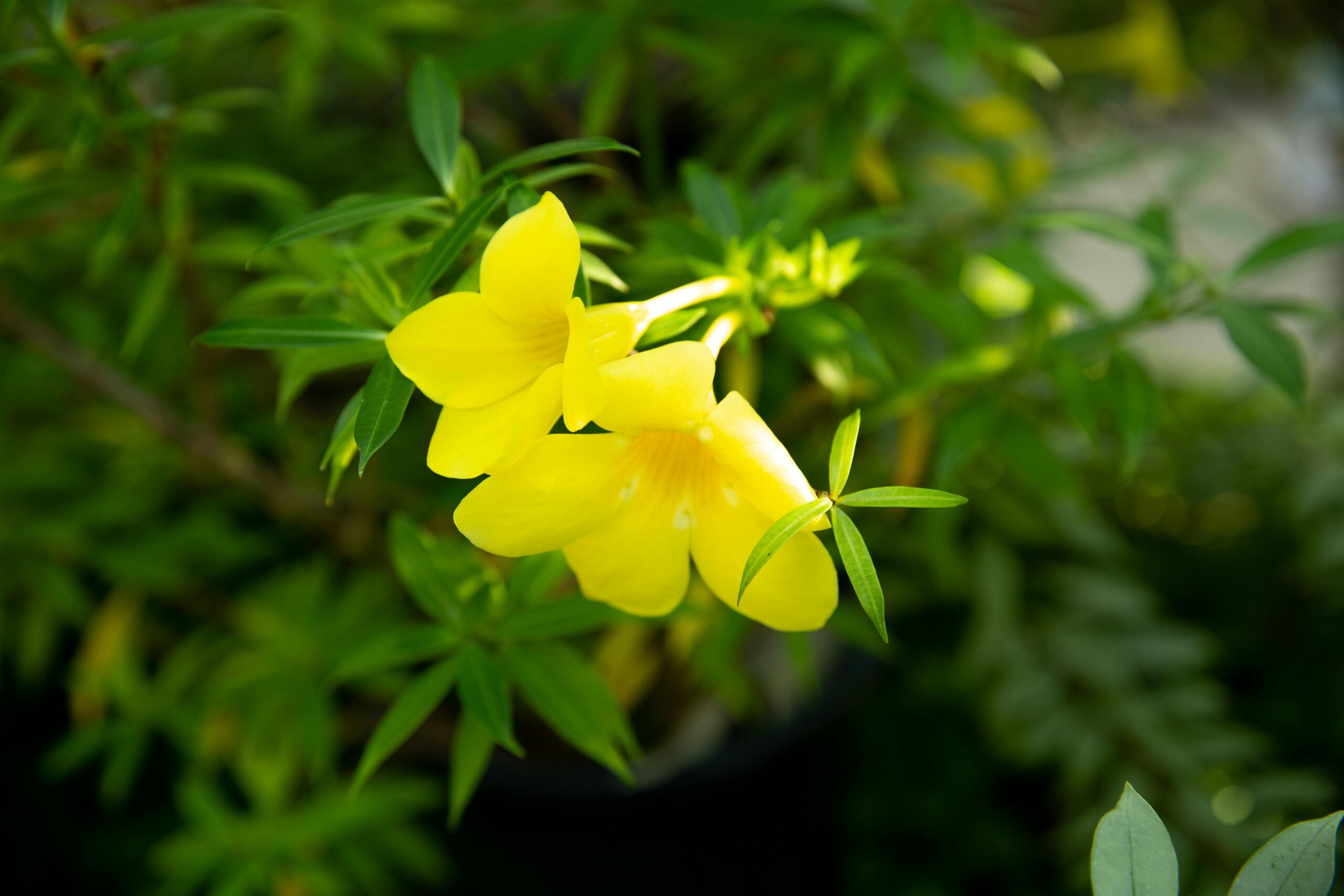
Few flowers capture the tropical spirit as vividly as the Allamanda (Allamanda cathartica), popularly known as the Golden Trumpet. Native to South and Central America, this vigorous climber is adored worldwide for its dazzling yellow trumpet-shaped flowers and glossy green foliage. In warm, humid regions, Allamanda thrives as both a landscape centerpiece and a natural fence or wall cover.
Its blooms radiate brightness, making it a favorite for resorts, home gardens, and urban landscapes. While its charm is undeniable, Allamanda is also known for its medicinal history, as traditional healers once used extracts from the plant for purgative purposes. However, care is needed — it is mildly toxic if ingested.
🌸 Season & Growth Habit
Allamanda is a tropical perennial climber that thrives in warm, humid climates.
- Blooming season: Primarily summer through autumn, though in frost-free regions, it flowers nearly year-round.
- Growth habit: A vigorous climber that can reach 3–6 meters or more, often trained on trellises, pergolas, or walls.
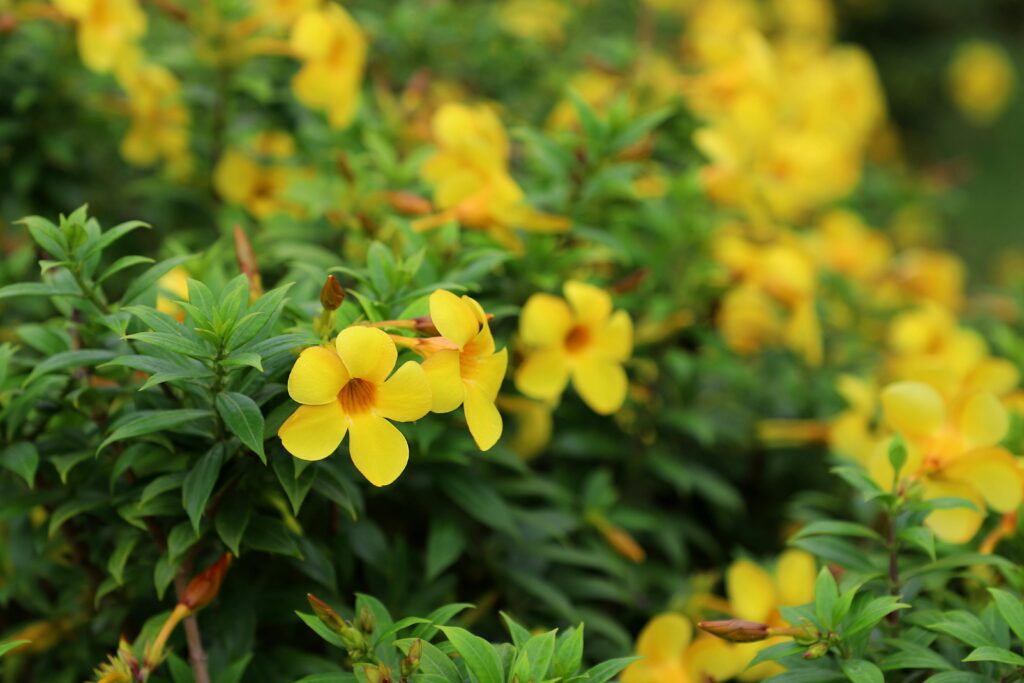
- Flowers: Large, funnel-shaped, bright golden-yellow blossoms with a soft fragrance.
- Foliage: Glossy, evergreen leaves that add to its ornamental appeal even when not in bloom.
🌍 Soil Needs & Planting
For best results, Allamanda prefers well-drained, fertile soil that retains moisture without becoming waterlogged. A soil pH of 6.0–7.0 (slightly acidic to neutral) is ideal.
When planting in the ground, enrich the soil with compost or well-rotted manure to encourage vigorous growth. In pots, a mix of garden soil + cocopeat + compost + sand ensures both nutrition and aeration.
Adding CocoWing Talking Soil enhances root strength and provides slow-release organic nutrition, supporting sustained flowering.
☀️ Sunlight & Watering
Allamanda loves the sun and needs a minimum of 5–6 hours of direct sunlight daily to bloom profusely. In shaded spots, it may produce lush foliage but fewer flowers.
- Watering: Keep soil consistently moist, especially during hot weather, but never soggy.
- Signs of stress: Yellowing leaves often indicate overwatering, while drooping or dry edges suggest underwatering.
- Mulching: Applying mulch at the base helps retain soil moisture and keeps roots cool.
✂️ Maintenance & Care
Allamanda requires regular maintenance to stay neat and flower-heavy:
- Pruning: Strong pruning after the flowering season helps control its vigorous growth and encourages new shoots.
- Fertilization: Feed with CocoWing Talking Soil or an organic flower booster every month for continuous blooms.
- Support: Being a natural climber, it thrives when trained on trellises, pergolas, or boundary walls.
- Temperature: Protect from frost — Allamanda is not cold-tolerant.
🌱 Propagation
Allamanda can be propagated through:
- Stem cuttings: Semi-hardwood cuttings root well when placed in moist, sandy soil.
- Air layering: An alternative for propagating mature plants.
Seeds are rarely used, as vegetative propagation is quicker and more reliable.
🐛 Pests & Problems
Allamanda is relatively hardy but can occasionally face:
- Aphids and mealybugs on new shoots.
- Spider mites in dry conditions.
- Leaf spot diseases in overly humid or waterlogged soils.
Maintaining airflow and feeding with Talking Soil keeps the plant more resistant to these issues.
🌼 Benefits & Uses
Allamanda is treasured not only for its beauty but also for its varied benefits:
- Ornamental use: Perfect for pergolas, fences, trellises, and large containers, offering vibrant garden color.
- Landscaping: Popular in tropical resorts and urban landscapes for its evergreen, lush, and cheerful appearance.
- Medicinal history: Traditionally used as a purgative in folk medicine, though it must be used cautiously due to toxicity.
- Ecological value: Provides habitat and nectar for pollinators like butterflies and bees.
🌱 Talking Soil Tip
Feeding Allamanda with CocoWing Talking Soil every 4–6 weeks ensures healthy vines, lush foliage, and non-stop golden blooms. The organic balance in Talking Soil supports long-term vigor without harming soil ecology.