
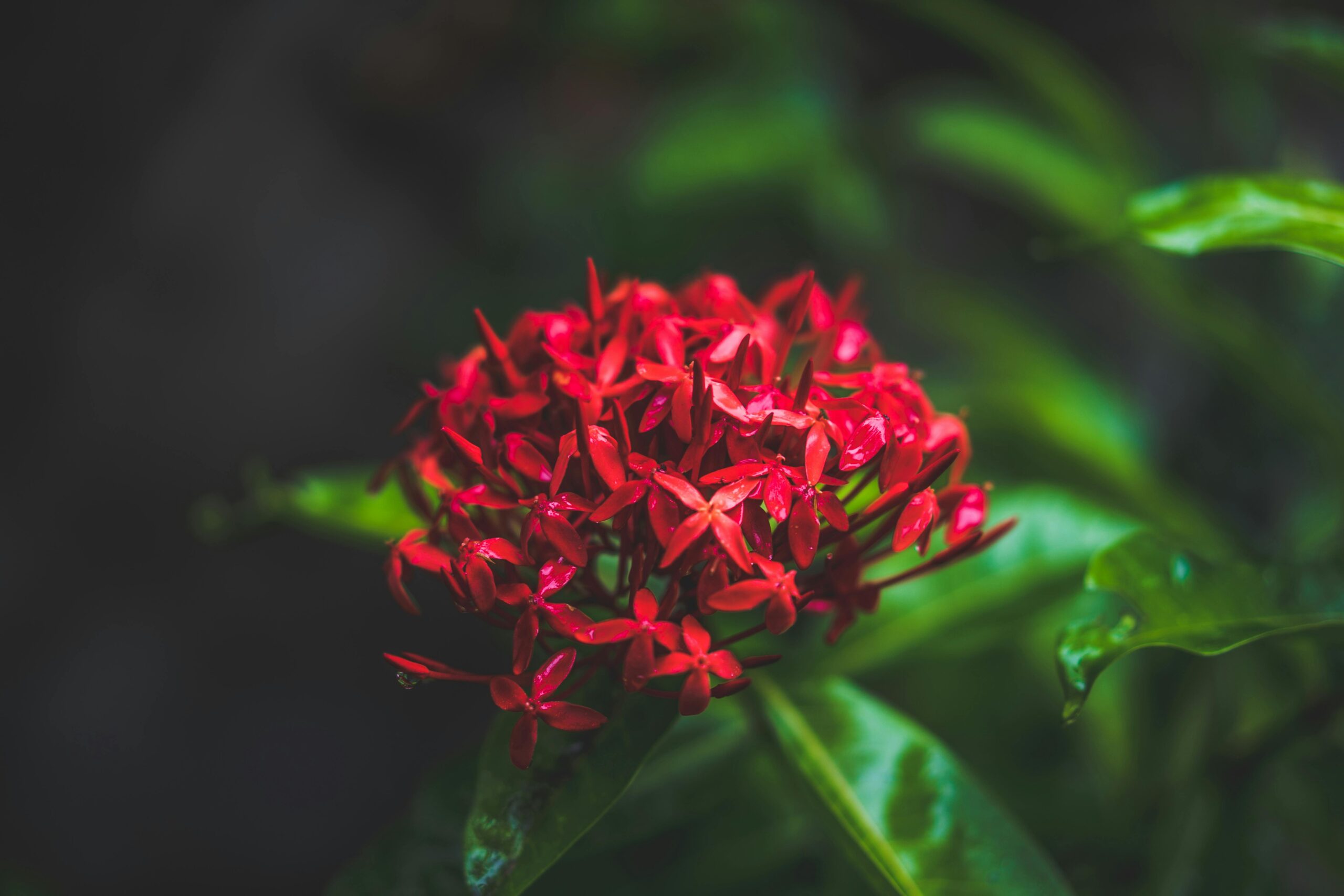
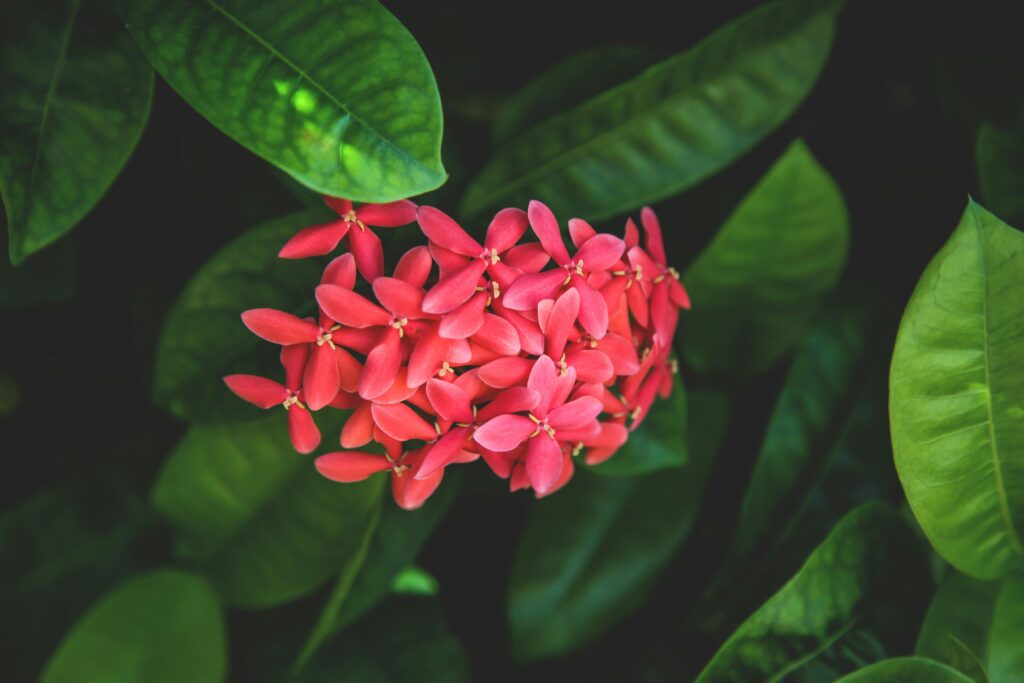
The Ixora flower, also known as the Jungle Geranium (Ixora coccinea), is one of the most vibrant tropical shrubs admired for its clusters of fiery red, orange, yellow, or pink flowers. Native to South and Southeast Asia, this evergreen shrub has become a favorite in both traditional and modern gardens.
Its dense, compact form and year-round blooming make it a landscape staple — seen in temples, parks, urban gardens, and home courtyards. In India, Ixora also holds spiritual significance, as its flowers are often used in religious offerings. Beyond its ornamental appeal, Ixora has a long history in Ayurveda, where its roots, leaves, and flowers are used in traditional remedies.
Season & Growth Habit
Ixora is a perennial evergreen shrub that thrives in tropical and subtropical climates.
- Blooming season: Flowers almost year-round, with peak blooming during summer and monsoon.
- Growth habit: Bushy, compact shrub ranging from 60 cm to 2 m, depending on the variety. Dwarf cultivars are popular for potted gardens and edging.
- Flowers: Produced in dense, dome-shaped clusters (corymbs) of small tubular blooms. Each cluster can contain dozens of tiny flowers, creating a striking burst of color.
- Foliage: Thick, leathery green leaves that add to its ornamental appeal even when not in bloom.
Soil Needs & Planting
Ixora loves slightly acidic soil (pH 5–6) and struggles in alkaline conditions where leaves often turn yellow.
- Garden soil preparation: Enrich with compost, leaf mold, or well-rotted manure to maintain fertility.
- Potted plants: Use a mix of garden soil + cocopeat + compost + river sand for good drainage and aeration.
- Talking Soil benefit: Adding CocoWing Talking Soil improves nutrient retention, supports root development, and enhances flowering cycles naturally.
Sunlight & Watering
Ixora thrives in full sun but can tolerate partial shade, especially in very hot climates.
- Sunlight: At least 4–6 hours of direct sunlight ensures abundant flowering.
- Watering: Keep the soil consistently moist, but avoid waterlogging. Ixora is sensitive to standing water, which can cause root rot.
- Mulching: Helps regulate soil moisture and keeps the roots cool during summer.
- Stress signs: Yellowing leaves often indicate alkaline soil or overwatering.
Maintenance & Care
Proper care ensures Ixora blooms continuously:
- Pruning: Light pruning after flowering keeps the plant compact and encourages new growth.
- Feeding: Apply CocoWing Talking Soil or organic flower fertilizer once every 4–6 weeks to sustain vibrant clusters.
- Soil acidity check: Occasionally supplement with organic matter like composted pine needles to maintain acidity.
- Pest control: Ixora is generally hardy but may attract aphids, mealybugs, and scale insects. Neem oil sprays help manage infestations.
Propagation
Ixora can be propagated by:
- Stem cuttings: Semi-hardwood cuttings root well in sandy, moist soil.
- Air layering: Effective for larger shrubs, producing well-established new plants.
- Seeds: Less common, as germination is slow.
Gardeners usually prefer stem cuttings for quick results and true-to-type plants.
Pests & Problems
Common challenges faced by Ixora include:
- Iron deficiency (chlorosis): Leaves turn yellow in alkaline soils. This is corrected with organic soil amendments or chelated iron.
- Root rot: Due to poor drainage.
- Scale insects and mealybugs: Can be controlled with neem oil or organic insecticidal sprays.
Benefits & Uses
Ixora is valued for much more than its beauty:
- Ornamental value: Perfect for hedges, borders, containers, and focal points in tropical gardens.
- Spiritual use: Widely used in temple offerings and rituals in India and Southeast Asia.
- Medicinal benefits: In Ayurveda, Ixora is used for skin ailments, stomach disorders, and wound healing. Flower infusions are also believed to have cooling properties.
- Ecological use: Attracts pollinators like bees, butterflies, and small birds, enhancing garden biodiversity.
Talking Soil Tip
Feed Ixora with CocoWing Talking Soil every 4–6 weeks to maintain soil acidity and provide organic nutrition for year-round flowering. Its balanced nutrients keep foliage lush and prevent yellowing, a common issue in alkaline soils.