
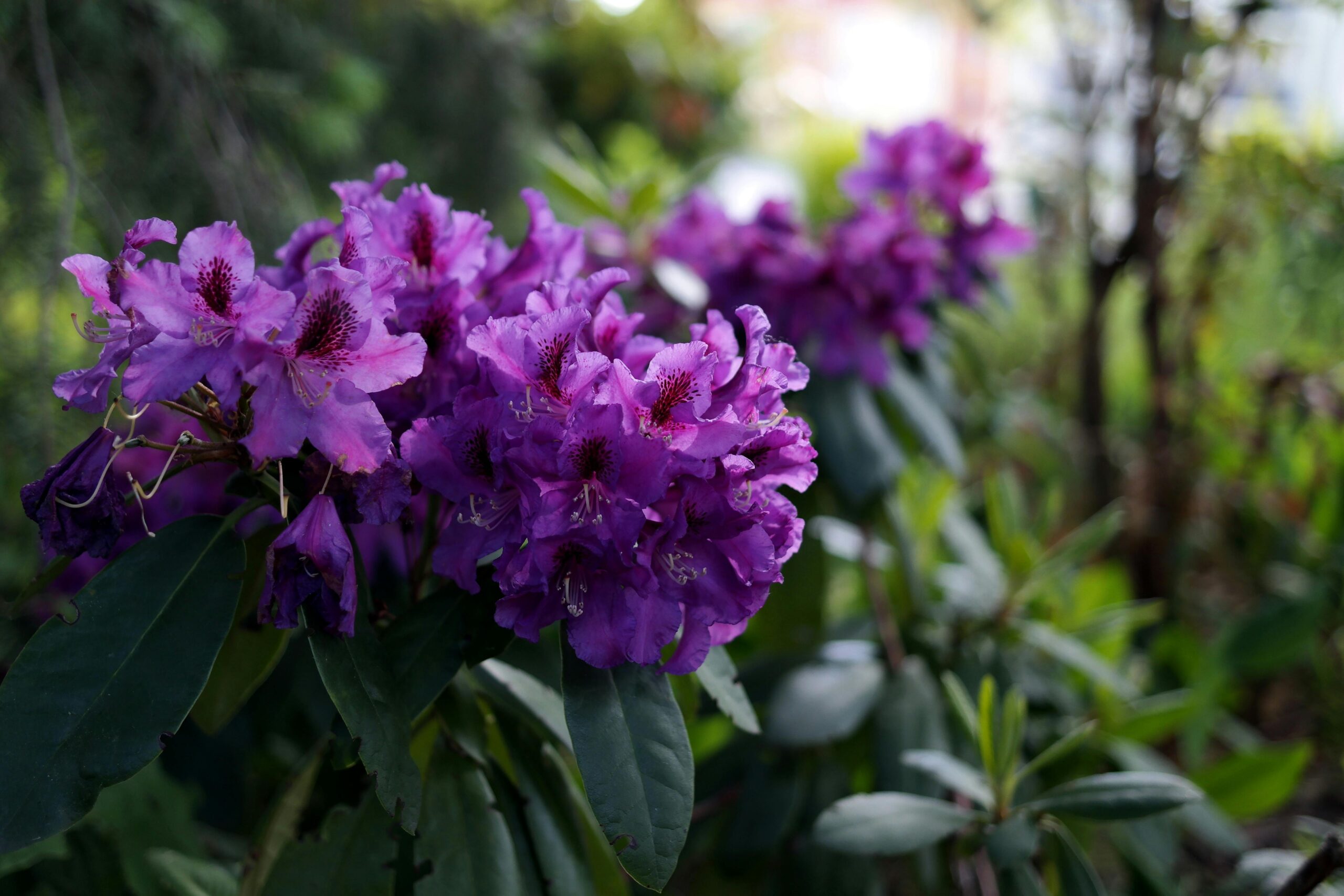
Rhododendrons are among the most spectacular flowering shrubs in the world, admired for their lush clusters of blooms and glossy evergreen foliage. Belonging to the Ericaceae family, these shrubs are native to Asia, Europe, and North America, with the Himalayas considered a major center of diversity.
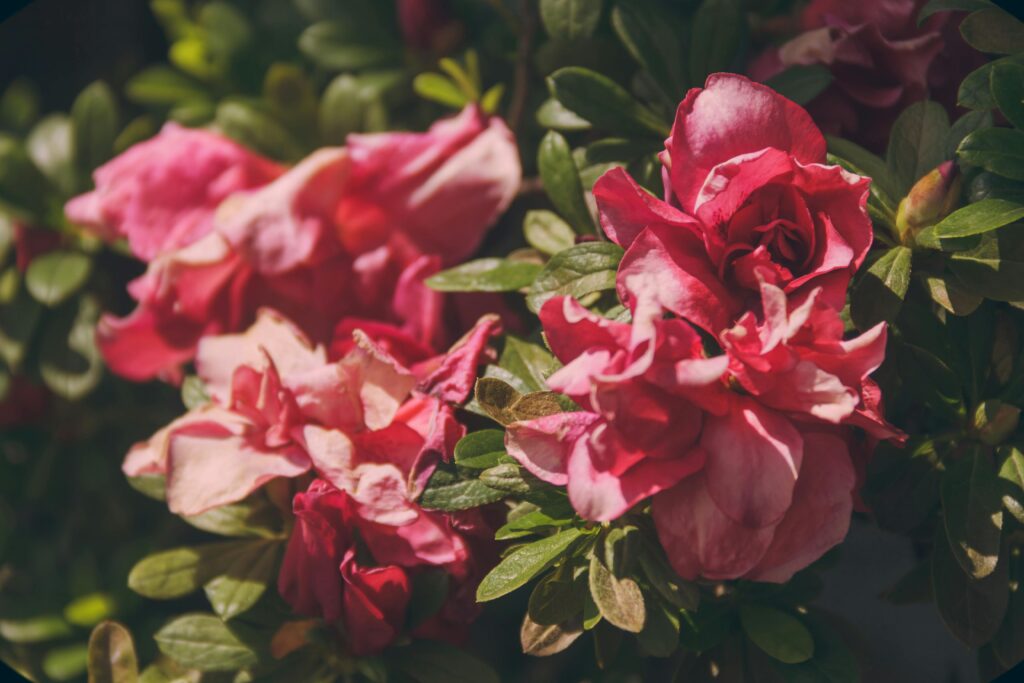
Their blooms range from soft pinks, purples, and whites to deep reds and purples, often forming large trusses that create a dramatic visual impact in gardens and landscapes. Beyond their ornamental value, Rhododendrons are a symbol of elegance and natural beauty, frequently featured in parks, temples, and formal garden designs.
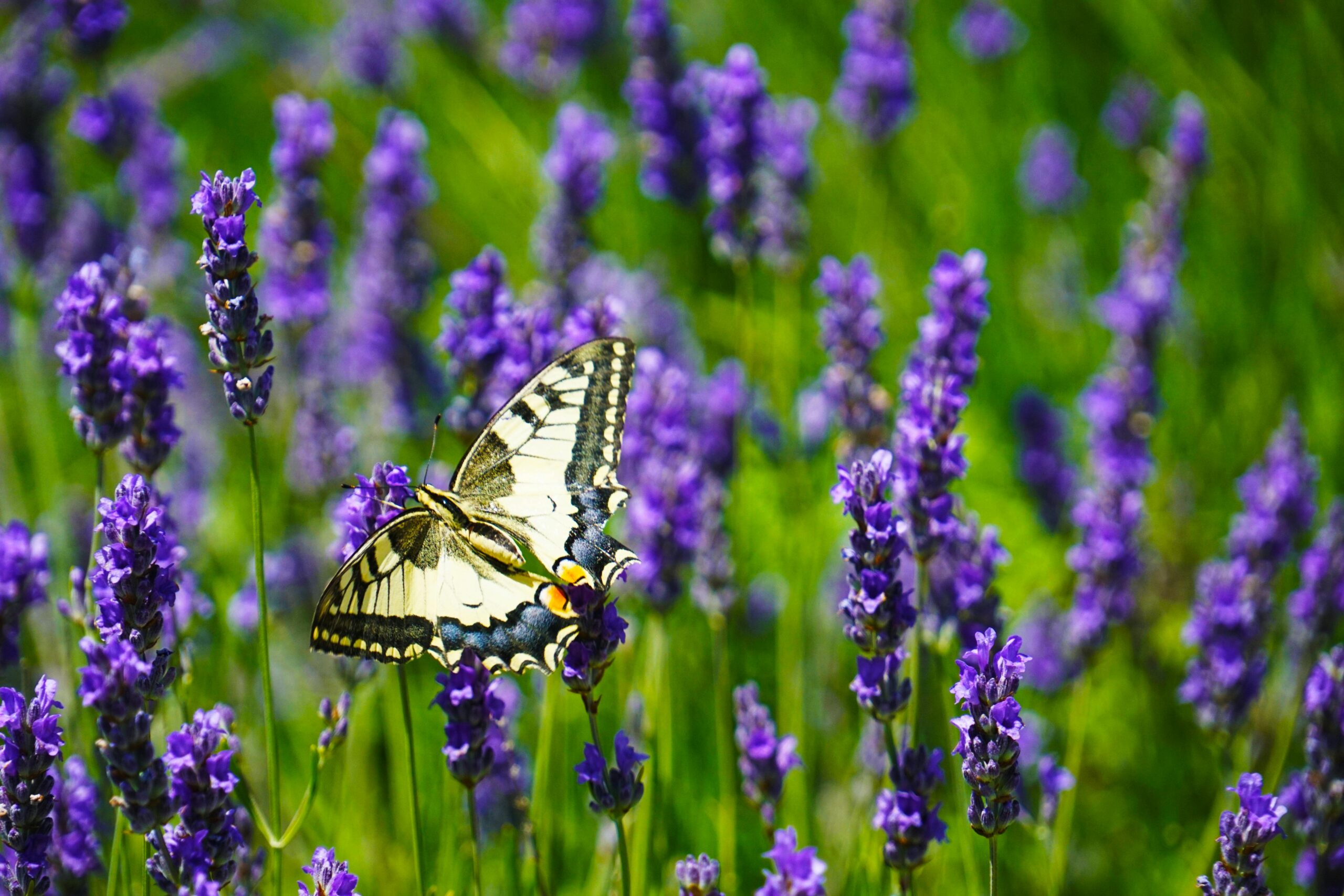
Rhododendrons also play an important ecological role. Their flowers attract a variety of pollinators, including bees, butterflies, and hummingbirds, while their dense foliage provides shelter for small birds and insects.
Season & Growth Habit
Rhododendrons are perennial evergreen shrubs that vary widely in size, from compact varieties 1–2 feet tall to towering shrubs reaching 20 feet or more.
- Blooming season: Most Rhododendrons bloom in spring (March to May), though some species flower in summer or autumn depending on climate and altitude.
- Growth habit: Rhododendrons have a bushy, rounded form with leathery, dark green leaves. Their branches often arch gracefully, creating a layered look that is both ornamental and naturalistic.
- Flowers: Large clusters (trusses) of trumpet-shaped flowers, often scented, attract pollinators and make a strong visual statement.
Soil Needs
Rhododendrons are acid-loving plants that thrive in well-draining, organically rich, slightly acidic soil (pH 4.5–6.0).
- Garden planting: Mix compost, leaf mold, or pine bark into the soil to improve aeration and fertility. Avoid heavy clay or alkaline soils, which can lead to yellowing leaves.
- Containers: Use a mix of cocopeat, compost, and perlite to ensure moisture retention and drainage.
- Talking Soil advantage: CocoWing Talking Soil naturally balances nutrients and maintains soil structure, supporting healthy root growth and vibrant blooms.
Proper soil preparation is crucial, as Rhododendrons are sensitive to poor drainage and alkaline conditions.
Light & Watering
Rhododendrons prefer partial shade, especially in regions with hot summers. Too much direct sunlight can scorch the leaves, while too little light may reduce flowering. Morning sun with afternoon shade is ideal.
- Watering: Keep the soil consistently moist but not soggy. Rhododendrons have shallow roots that dry out quickly, so deep watering 2–3 times a week during dry spells is recommended.
- Mulching: A thick layer of organic mulch protects shallow roots, conserves moisture, and helps maintain soil acidity.
Maintenance & Care
Rhododendrons require thoughtful care to thrive:
- Pruning: Light pruning after flowering encourages bushy growth and improves airflow. Remove dead or diseased branches to maintain plant health.
- Fertilization: Use acid-loving plant fertilizers or CocoWing Talking Soil to provide essential nutrients. Avoid over-fertilizing, which can burn roots.
- Winter care: Protect roots from frost with mulch and, in cold climates, consider planting near a wall or providing shade cloth.
Propagation
Rhododendrons can be propagated through several methods:
- Stem cuttings: Semi-hardwood cuttings taken in summer root successfully in a sandy, moist medium.
- Layering: Air or ground layering produces robust new plants while keeping them attached to the parent.
- Seeds: Sown in acidic, well-draining soil; germination takes longer and seedlings require careful nurturing.
Propagation via cuttings or layering is most practical for gardeners seeking true-to-type plants.
Pests & Problems
Rhododendrons are relatively hardy but can face:
- Aphids & lacebugs: Feed on young leaves; organic sprays help control infestations.
- Root rot: Often caused by waterlogged soil; improve drainage and avoid heavy watering.
- Leaf spot & powdery mildew: Prevented with proper spacing and good airflow.
Uses & Benefits
- Ornamental appeal: Ideal for borders, woodland gardens, terraces, and public landscapes.
- Pollinator-friendly: Attracts bees, butterflies, and hummingbirds.
- Erosion control: Their dense root systems stabilize soil on slopes and embankments.
- Cultural significance: In several Asian cultures, Rhododendrons are considered auspicious and used in festivals and decorations.
Talking Soil Tip
Applying CocoWing Talking Soil around the base supports soil acidity, improves nutrient availability, and ensures consistent, vibrant flowering year after year.