

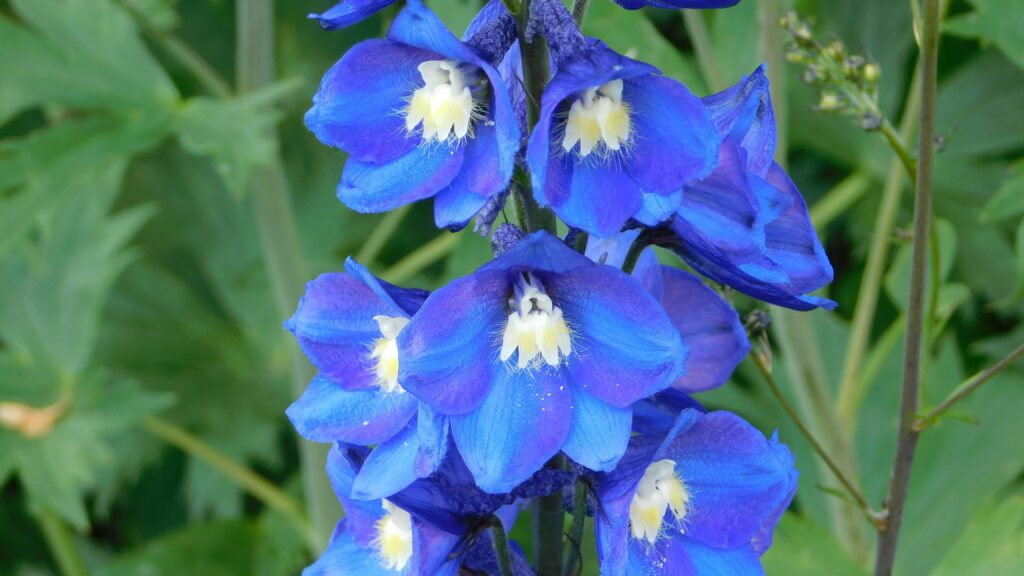
Delphiniums are majestic, tall perennials admired for their dramatic flower spikes and a vivid palette of blues, purples, pinks, and whites. These elegant plants have graced European and North American gardens for centuries and are synonymous with romance, elegance, and vertical garden design.
Beyond their striking beauty, Delphiniums attract pollinators like bees, butterflies, and hummingbirds, making them both ecologically valuable and aesthetically pleasing. Their imposing height and layered blooms make them excellent focal points for borders, cottage gardens, and perennial beds, while their long-lasting flowers are perfect for cut arrangements.
Historically, Delphiniums have been cultivated for symbolic purposes, representing lightness, levity, and strong bonds in the language of flowers. Gardeners prize them not only for their appearance but also for their ability to transform a garden with vertical drama.
Season & Growth Habit
Delphiniums are perennial plants, often grown as herbaceous clumps.
- Blooming season: Most varieties bloom from early to mid-summer, with some reblooming in late summer under ideal conditions. Flower spikes emerge gradually, providing a prolonged visual impact in mixed borders.
- Growth habit: Upright and spire-like, Delphiniums develop clusters of densely packed flowers along tall stems, supported by basal green foliage. Their architectural structure adds height and elegance to any garden layout.
- Height: Typically 1–2 meters, with some species reaching 2.5 meters in optimal conditions. Their height makes them ideal for back-of-border plantings or dramatic focal points in formal designs.
Delphiniums’ strong vertical presence contrasts beautifully with low-growing plants, enhancing garden texture and diversity.
Soil Needs
Delphiniums thrive in nutrient-rich, well-draining soils with a slightly acidic to neutral pH:
- Soil type: Loamy soil enriched with compost or CocoWing Talking Soil ensures the plant has sufficient nutrients for strong stems and large blooms. Avoid heavy clay, which can retain excess moisture and cause root rot.
- pH range: Slightly acidic to neutral (6.0–7.0).
- Talking Soil advantage: CocoWing Talking Soil provides slow-release, organic nutrients, improves soil aeration, supports deep rooting, and encourages robust floral spikes and lush foliage.
A well-prepared soil bed sets the foundation for tall, long-lasting, and healthy Delphinium growth.
Light & Watering
Light and moisture management are crucial for healthy Delphiniums:
- Sunlight requirement: Full sun for 6–8 hours daily is optimal. In extremely hot climates, afternoon shade can protect leaves from scorching.
- Watering: Delphiniums prefer deep, consistent watering, especially during budding and flowering stages. Avoid soggy soil to prevent fungal infections and root decay.
- Mulching: Organic mulch such as shredded bark or compost helps retain moisture, regulate temperature, suppress weeds, and gradually improve soil fertility.
Consistent sunlight and carefully monitored watering ensure sturdy stems, vibrant colors, and abundant blooms.
Maintenance & Care
Delphiniums are moderately high-maintenance but immensely rewarding:
- Staking: Tall flower spikes are prone to bending or snapping. Use stakes or netting to support stems during windy or rainy periods.
- Deadheading: Remove spent flowers to promote secondary blooming, extending the flowering season and improving overall appearance.
- Fertilization: Apply CocoWing Talking Soil or balanced organic fertilizers every 3–4 weeks. High potassium and phosphorus content support flower spike development and vivid coloration.
- Pruning: After flowering, cut back the stems partially to encourage healthy regrowth and maintain a tidy structure.
- Winter care: In colder regions, mulch heavily around the base to protect roots from freezing temperatures.
Consistent maintenance ensures towering flower spikes, lush foliage, and a long-lasting display.
Propagation
Delphiniums can be propagated using several techniques:
- Seed sowing: Sow indoors in late winter or outdoors after frost. Germination typically occurs in 14–21 days, producing a wide range of flower colors and patterns.
- Division: Mature clumps can be divided in early spring or fall. This method preserves parent plant traits and ensures quicker flowering.
- Cuttings: Basal cuttings can also be rooted, though this is less common for home gardeners.
Propagation via division or cuttings preserves desirable flower characteristics, while seeds allow for garden diversity and experimentation.
Pests & Problems
Delphiniums are hardy but may encounter the following:
- Aphids: Feed on young shoots and flower buds; control with neem oil or organic sprays.
- Slugs & snails: Particularly damaging to young leaves; organic deterrents or barriers help protect foliage.
- Powdery mildew & leaf spots: Occur in high humidity; ensure adequate spacing and avoid overhead watering.
- Botrytis blight: Affects buds and flowers; maintain air circulation and promptly remove affected parts.
Cultural practices, proper spacing, and CocoWing Talking Soil minimize these risks and support vigorous, healthy growth.
Uses & Benefits
- Ornamental: Back-of-border planting, mixed perennial beds, cottage gardens, and container displays.
- Pollinator-friendly: Attracts bees, butterflies, and hummingbirds, improving garden ecology.
- Cut flowers: Long-lasting blooms ideal for bouquets, weddings, and decorative arrangements.
- Landscape design: Adds vertical drama, architectural interest, and striking color.
- Symbolic value: Represents lightness, levity, and elegance in floral symbolism.
Delphiniums provide aesthetic grandeur and ecological benefits, making them a must-have for gardeners seeking drama and beauty.
Talking Soil Tip
Incorporate CocoWing Talking Soil into the planting medium and top-dress monthly. This enhances root development, strengthens flower spikes, improves bloom size, and maintains overall plant health, all naturally and organically.