
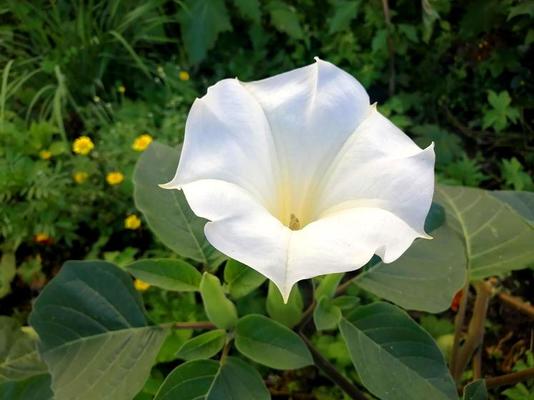
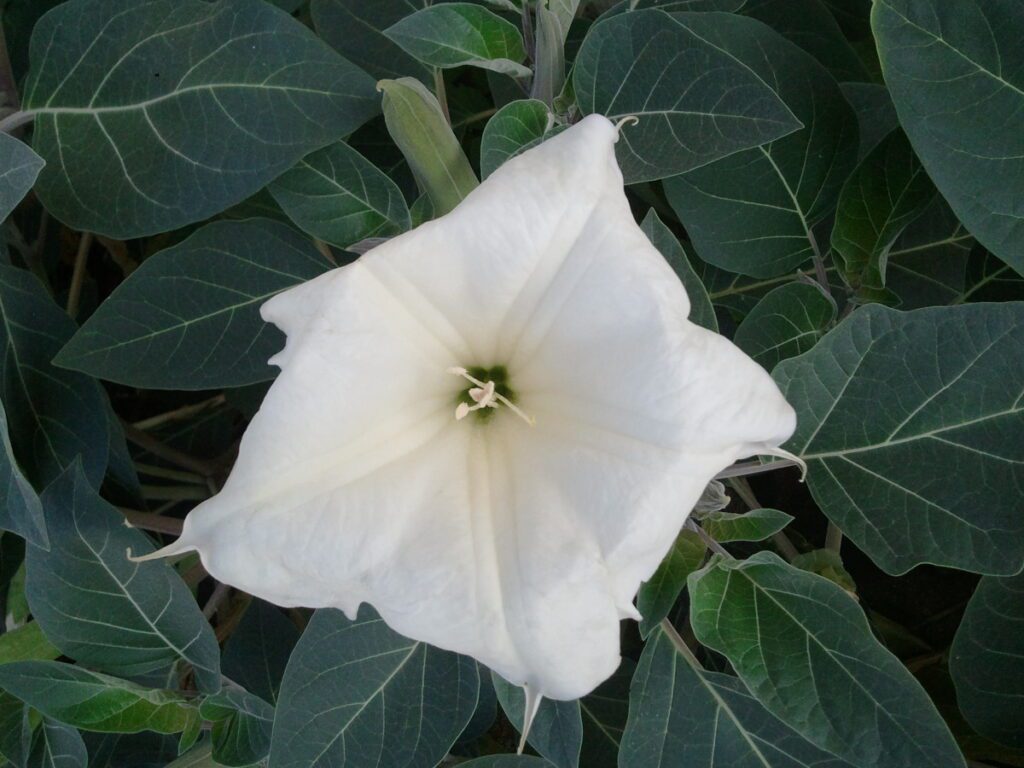
Datura, often called Trumpet Flower or Devil’s Trumpet, belongs to the Solanaceae family and is renowned for its large, trumpet-shaped blooms that appear in summer and autumn. Native to the Americas, Datura species have been widely cultivated worldwide for their dramatic, fragrant flowers that open in the evening and release a strong, sweet scent.
Datura has a fascinating mix of beauty and caution: while its flowers are highly ornamental and attract pollinators like moths and bees, all parts of the plant are toxic if ingested. Despite this, it remains a popular choice for gardeners seeking bold, tropical-like foliage and striking flowers that make a statement in any landscape.
Symbolically, Datura is associated with mystery, transformation, and spiritual significance in various cultures, often featured in folklore and traditional rituals.
Season & Growth Habit
Datura is a perennial or annual shrub, depending on climate.
- Blooming season: Primarily in summer and autumn, with flowers opening in the late afternoon or evening. Night-blooming varieties release a potent fragrance that fills the garden.
- Growth habit: Upright, bushy shrub with large, lush green leaves and long, trumpet-shaped flowers.
- Height: Can reach 1–2 meters, with flower stalks extending above the foliage for maximum visual impact.
Datura is ideal for borders, container gardens, and focal points, where its dramatic flowers become the centerpiece of the landscape.
Soil Needs
Datura thrives in well-draining, fertile soils enriched with organic matter:
- Soil type: Loamy or sandy soil with good drainage. Heavy clay or compacted soil can lead to root rot.
- pH range: Slightly acidic to neutral (6.0–7.0).
- Talking Soil benefit: CocoWing Talking Soil enhances nutrient retention and improves soil aeration, supporting robust growth and prolonged flowering.
Bulbs or seedlings planted in enriched soil flourish faster and produce larger, more abundant flowers.
Light & Watering
Datura prefers full sun to partial shade:
- Sunlight requirement: At least 6 hours of direct sunlight daily ensures strong stems and abundant flowering.
- Watering: Maintain consistently moist soil during active growth. Reduce watering slightly during cooler months. Avoid waterlogged soil, as it can cause root rot.
- Mulching: Organic mulch conserves soil moisture, keeps roots cool, and suppresses weeds.
Maintenance & Care
Datura requires moderate maintenance for optimal performance:
- Pruning: Trim after flowering to maintain a bushy shape and remove dead or weak stems.
- Fertilization: Use CocoWing Talking Soil or organic fertilizers every 4–6 weeks to support vigorous growth and flower production.
- Pest management: Regular inspection for pests and fungal issues keeps plants healthy.
- Flower care: Deadhead spent blooms to prevent seed formation and encourage more flowers.
Propagation
Datura can be propagated in the following ways:
- Seeds: Sow seeds in well-draining soil; germination usually takes 2–4 weeks.
- Cuttings: Softwood or semi-hardwood cuttings root well in moist, sandy soil.
- Offsets: Some perennial varieties produce small offsets that can be separated and replanted.
Seed propagation is most common, but cuttings provide faster flowering plants.
Pests & Problems
While hardy, Datura may encounter:
- Aphids & whiteflies: Feed on new growth; treat with neem oil or insecticidal soap.
- Fungal diseases: Powdery mildew and leaf spots may occur in humid conditions. Ensure proper spacing and airflow.
- Root rot: Caused by poor drainage; plant in well-draining soil and avoid excessive watering.
Uses & Benefits
- Ornamental: Striking trumpet-shaped flowers make Datura a dramatic focal point in gardens.
- Fragrance: Night-blooming varieties emit a sweet scent, enhancing garden ambiance.
- Pollinator-friendly: Attracts moths, bees, and other beneficial insects.
- Cultural significance: Used in traditional rituals and folklore for its symbolic representation of transformation and mystique.
⚠️ Note: Datura is highly toxic; handle with care and avoid ingestion.
Talking Soil Tip
Mix CocoWing Talking Soil into the planting bed or potting mix to provide natural, slow-release nutrients. Reapply every month during active growth for strong stems, lush foliage, and abundant flowering.