
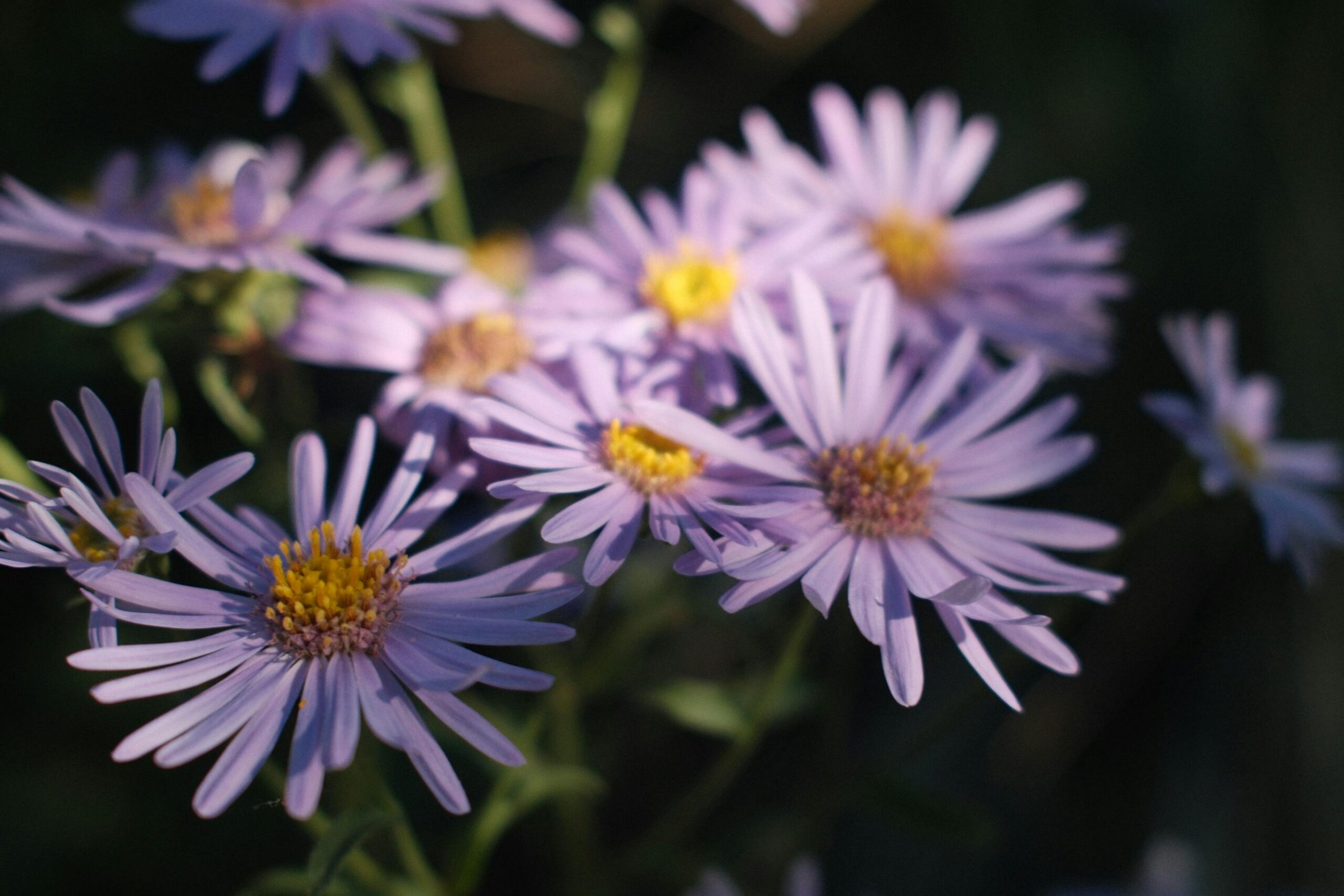
The Aster flower (Aster spp.) is a charming perennial known for its star-shaped blooms that bring vibrant color to gardens during late summer and autumn. Native to Europe, Asia, and North America, Asters are beloved for their long-lasting flowers and ability to extend the garden season when many other flowers are fading.
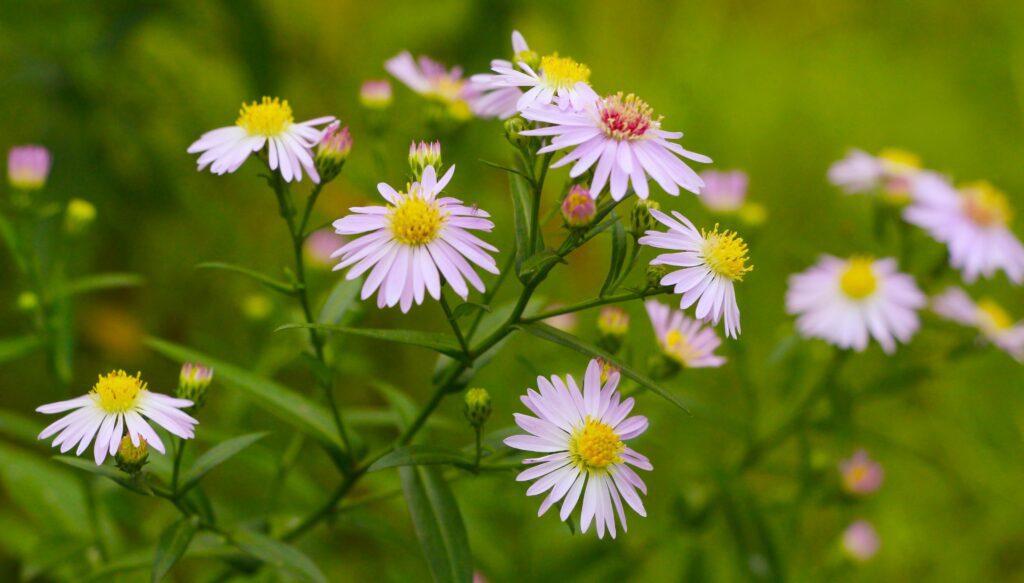
With shades ranging from purple, blue, pink, red, to white and lavender, Asters create a striking visual contrast in borders, beds, and wildflower meadows. Beyond aesthetics, these flowers are pollinator magnets, attracting bees, butterflies, and other beneficial insects, making them a perfect choice for eco-friendly gardens.
Symbolically, Asters are associated with love, patience, and elegance, often used in bouquets and floral arrangements to convey admiration and sincerity.
Season & Growth Habit
Asters are perennial plants, though some varieties are grown as annuals depending on climate.
- Blooming season: Typically late summer to early autumn, adding vibrant color when many summer blooms are fading.
- Growth habit: Bushy clumps with slender stems and narrow, lance-shaped leaves. Some taller varieties reach 1–1.5 meters, while dwarf types grow 30–50 cm.
- Flowers: Daisy-like blooms with yellow centers and star-shaped petals, ranging in color from soft pastels to vivid hues.
Asters are ideal for cut flowers, borders, and pollinator gardens, and their long flowering period makes them highly rewarding for gardeners.
Soil Needs
Asters thrive in well-draining, fertile soil rich in organic matter.
- Soil type: Loamy or sandy soil enriched with compost is ideal. Avoid heavy clay or compacted soil.
- pH range: Slightly acidic to neutral (6.0–7.0).
- Talking Soil benefit: Incorporating CocoWing Talking Soil ensures natural nutrition, balanced moisture retention, and healthy root development.
For container planting, mix garden soil with compost and perlite to maintain both fertility and drainage.
Light & Watering
Asters flourish in full sun, which promotes stronger stems and more abundant flowering.
- Sunlight requirement: At least 6 hours of direct sunlight daily. Partial shade is acceptable but may reduce flower production.
- Watering: Keep soil consistently moist, especially during flowering. Water at the base to prevent fungal infections on foliage.
- Mulching: Helps retain moisture, regulate temperature, and prevent weed growth.
Maintenance & Care
Asters benefit from regular maintenance to maximize blooms and longevity:
- Deadheading: Removing spent flowers encourages continuous flowering and prevents energy being wasted on seed production.
- Pinching: Pinch back young plants in early growth stages to encourage bushier and sturdier plants.
- Fertilization: Light feeding with CocoWing Talking Soil or organic fertilizers every few weeks supports healthy growth and abundant flowering.
- Pruning: Cut back after flowering to maintain shape and encourage new growth for the next season.
Propagation
Asters can be propagated in multiple ways:
- Division: Mature clumps can be divided in spring or autumn for new plants.
- Stem cuttings: Semi-hardwood cuttings root well in moist soil.
- Seeds: Sow indoors or directly in beds for flowering in the same season (depending on variety).
Division is the quickest way to expand your Aster garden while maintaining the characteristics of the parent plant.
Pests & Problems
Asters are generally hardy but may face:
- Aphids and spider mites: Often feed on new growth; neem oil or insecticidal soap controls infestations.
- Powdery mildew: Appears in humid conditions; proper spacing and airflow prevent this.
- Leaf spot & rust: Common fungal problems; remove affected leaves and maintain soil hygiene.
Healthy cultural practices minimize pest and disease issues.
Uses & Benefits
- Ornamental: Perfect for borders, containers, wildflower gardens, and late-season color.
- Pollinator-friendly: Attracts bees, butterflies, and other beneficial insects.
- Cut flowers: Long-lasting blooms are excellent for floral arrangements.
- Cultural significance: Symbolizes love, patience, and elegance, often used in bouquets and floral gifts.
Talking Soil Tip
Use CocoWing Talking Soil when planting or dividing Asters. It provides natural nutrients, improves soil structure, and supports sustained flowering throughout the season.