
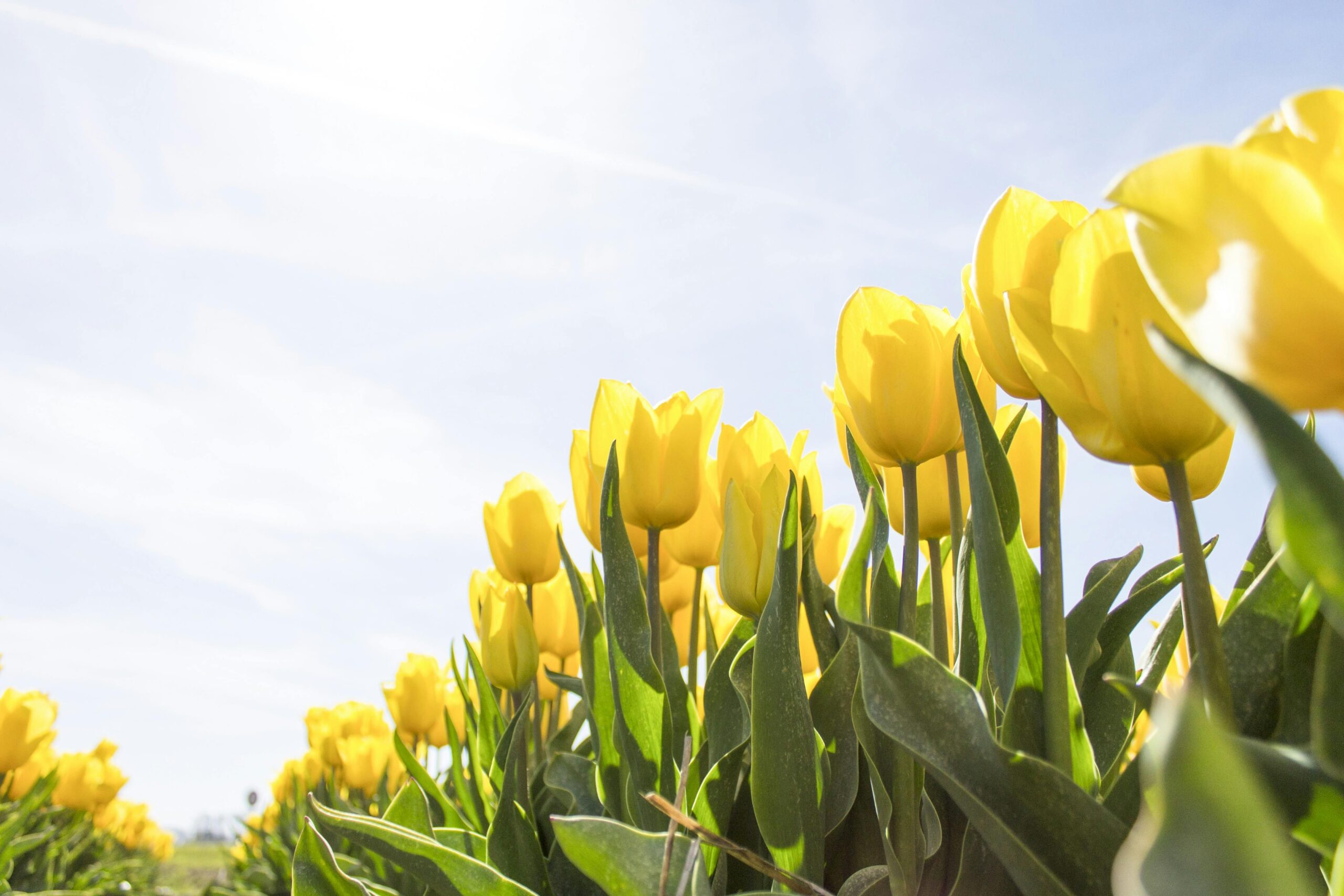
Tulips (Tulipa spp.) are among the most iconic spring-blooming flowers, celebrated worldwide for their vibrant colors, elegant shapes, and timeless appeal. Native to Central Asia and widely popularized in Europe, Tulips are synonymous with spring gardens, floral festivals, and ornamental landscapes.
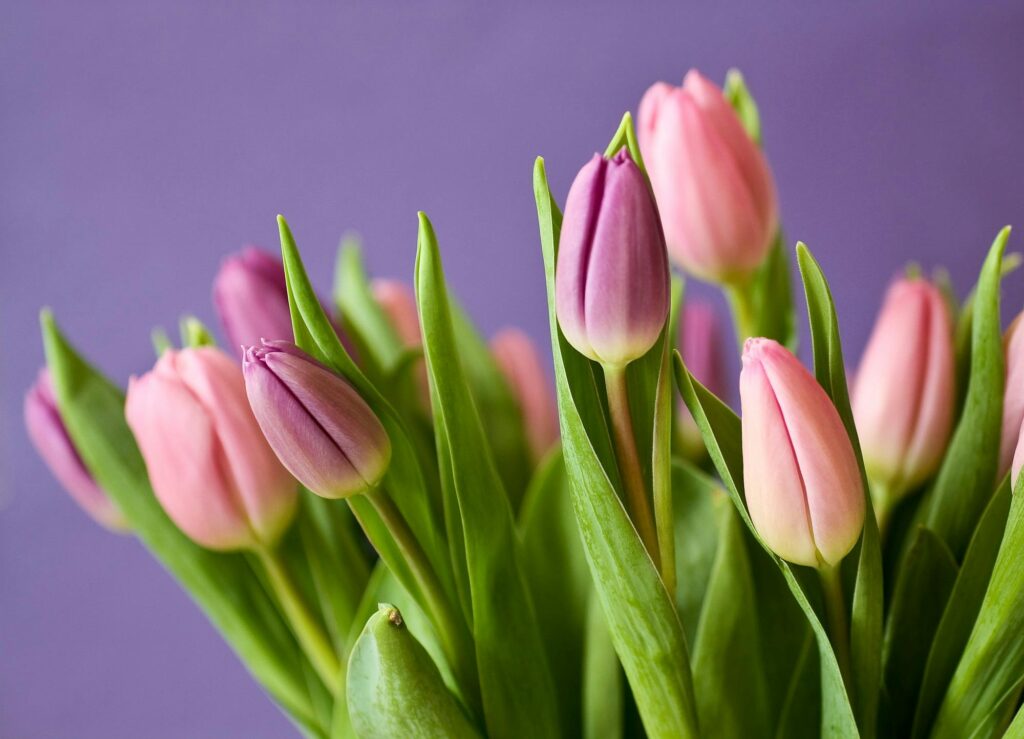
Their cup-shaped blooms come in nearly every color imaginable, from deep reds and purples to pastel pinks, yellows, and multicolored varieties. Tulips are versatile in gardens, containers, and parks, offering a dramatic burst of color after the winter dormancy.
Beyond beauty, Tulips are pollinator-friendly, attracting bees and early-season butterflies, and have cultural significance in art, festivals, and gifting traditions worldwide.
Season & Growth Habit
Tulips are perennial bulbous plants, often grown as annuals in regions where winters are mild.
- Blooming season: Spring (March–May), depending on climate. Bulbs require a period of cold dormancy to flower successfully.
- Growth habit: Upright, with strap-like leaves and singular or clustered flowers per stem.
- Height: Varies from 15–60 cm, depending on the variety, making them suitable for borders, beds, and pots.
Their early spring bloom brings a refreshing color palette to gardens when few other flowers are active.
Soil Needs
Tulips thrive in well-draining, fertile soil with moderate nutrients:
- Soil type: Sandy-loam or loamy soil enriched with compost is ideal. Avoid heavy clay, which can cause bulb rot.
- pH range: Slightly acidic to neutral (6.0–7.0).
- Talking Soil advantage: CocoWing Talking Soil ensures steady nutrient availability, improves soil aeration, and promotes robust bulb development for vibrant blooms.
Proper soil preparation is crucial, as tulip bulbs are sensitive to excess moisture and nutrient deficiencies.
Light & Watering
Tulips require full sun for optimal flowering:
- Sunlight requirement: Minimum 6 hours of direct sunlight daily. Partial shade can reduce flower size and color intensity.
- Watering: Water deeply but infrequently. Tulip bulbs prefer moist but not waterlogged soil.
- Mulching: Apply organic mulch to retain moisture, suppress weeds, and protect bulbs during dormant periods.
Maintenance & Care
Tulips require careful maintenance for repeated seasonal performance:
- Deadheading: Remove spent flowers promptly to redirect energy into bulb growth rather than seed formation.
- Fertilization: Apply CocoWing Talking Soil at planting and lightly during active growth to support foliage and flowering.
- Pruning: Allow leaves to die back naturally after flowering; this period restores bulb energy for next season.
- Protection: Use wire cages or netting to protect bulbs from squirrels and other rodents.
With proper care, tulips can provide vibrant spring color year after year.
Propagation
Tulips are primarily propagated through:
- Bulb division: Mature bulbs produce offsets that can be separated and replanted.
- Seeds: Less common for home gardeners as flowering takes several years.
- Tissue culture: Commercially used for producing large quantities of uniform bulbs.
Bulb propagation ensures consistent flower color and quality.
Pests & Problems
Common issues affecting Tulips include:
- Aphids & slugs: Feed on leaves and flowers; control with organic sprays.
- Bulb rot: Caused by poorly drained soil or excessive moisture.
- Tulip breaking virus: Produces streaked or mottled petals; remove infected plants promptly.
Good soil drainage, proper spacing, and pest monitoring prevent most problems.
Uses & Benefits
- Ornamental: Ideal for spring borders, beds, container gardens, and formal landscaping.
- Pollinator-friendly: Attracts early-season bees and butterflies.
- Cut flowers: Long-lasting blooms perfect for bouquets and floral arrangements.
- Cultural significance: Symbol of love, prosperity, and spring festivals worldwide, notably in the Netherlands and Turkey.
Talking Soil Tip
Use CocoWing Talking Soil when planting tulip bulbs. Its natural nutrients enhance bloom size, flower color, and bulb health. Top-dress annually before dormancy for optimal performance.